To view photo images of works, scroll right on laptop or down on Iphone
Fragments of Being series conveys the concept of breaking down an object into its individual components, while “being” hints at the essence or identity of the object being deconstructed and transformed into something abstract. It suggests a journey from the familiar to the unfamiliar, inviting the viewer to reconsider the relationship between parts and the whole.
Ace’s work is deeply rooted in the impact of the digital age and how it exponentially transforms and infuses Anishinaabe culture with new technologies and new ways of communicating. His work attempts to harness and bridge the precipice between historical and contemporary knowledge, art, and power, while maintaining a distinct Anishinaabeg aesthetic connecting generations. His unique and signature usage of electronic components are carefully transformed into signs and semiotics: a mnemonic visual language deeply rooted in an ancient worldview offering new ways of understanding and making sense of Anishinaabe contemporeanity. Incorporating a multiplicity of mediums, his work transgresses the ephemeral and can be read as metaphors for the fragility of cultural knowledge, memory, spirituality, and ceremony in our post-colonial society. Ace subtly draws our attention to the longstanding attributes of Anishinaabe cultural continuity, survivance, innovation, and culture change.
For his new body of work, Ace explains:
“I am intentionally pushing the boundaries of my textile-based practice through the creation of a new series of provocateur works that explore the historical and contemporary states of Anishinaabe culture through a literal deconstruction of three-dimensional objects drawn from our material culture and transforming them into contemporary abstractions. When an object’s disparate parts, for example, taking apart an ogimaa-wiiwkwaan (Chief’s Hat), and reconfiguring these oval, rectilinear, and composite shapes, along with their inherent materiality, onto a flat two-dimensional plane, they immediately transform themselves into a pure form of abstraction. Also included in this new body of work is a large-scale abstract soft sculpture installation (4.8 x 1.2 metre) entitled Grand Entry that integrates beadwork, ribbon work, mixed media and Ace’s signature electronic component floral motifs. It is the fragmentary abstracted view of what a dancer would see entering the dance circle. In a somewhat ironic way, these new abstractions also engage and are seemingly in dialogue with western art history, in particular abstract expressionism and conceptualism, thus expanding the potential for a new discourse in contemporary Anishinaabe visual art.”
Ace concludes by drawing our attention to his contemporary critique that “in this hyper-digital and cyber-age of existence, we have become increasingly disconnected from our ability to fully experience and comprehend the mnemonic qualities of the hand-made and our ability to decipher the experiential of its sensory and intellectual engagement. My focus on material and materiality is deliberate to evoke a deeper understanding of the impact of colonization on Anishinaabeg traditional knowledge and material culture to give substance to our current trend of resurgence and cultural revitalization.”
Barry Ace (February 11, 2025)
Note: Ogimaa-wiiwkwan (Chief’s Hat) and Convergence of Dissonant Parts was first exhibited at YYZ Artists’ Outlet (Toronto) in the exhibition Indigenous Fashion Arts: Reverence and Conviction curated by Sage Paul (Denesuliné), Indigenous Fashion Arts.
Note: See Indigenous Fashion Arts: Reverence and Conviction YYZ Artist Outlet (Toronto).

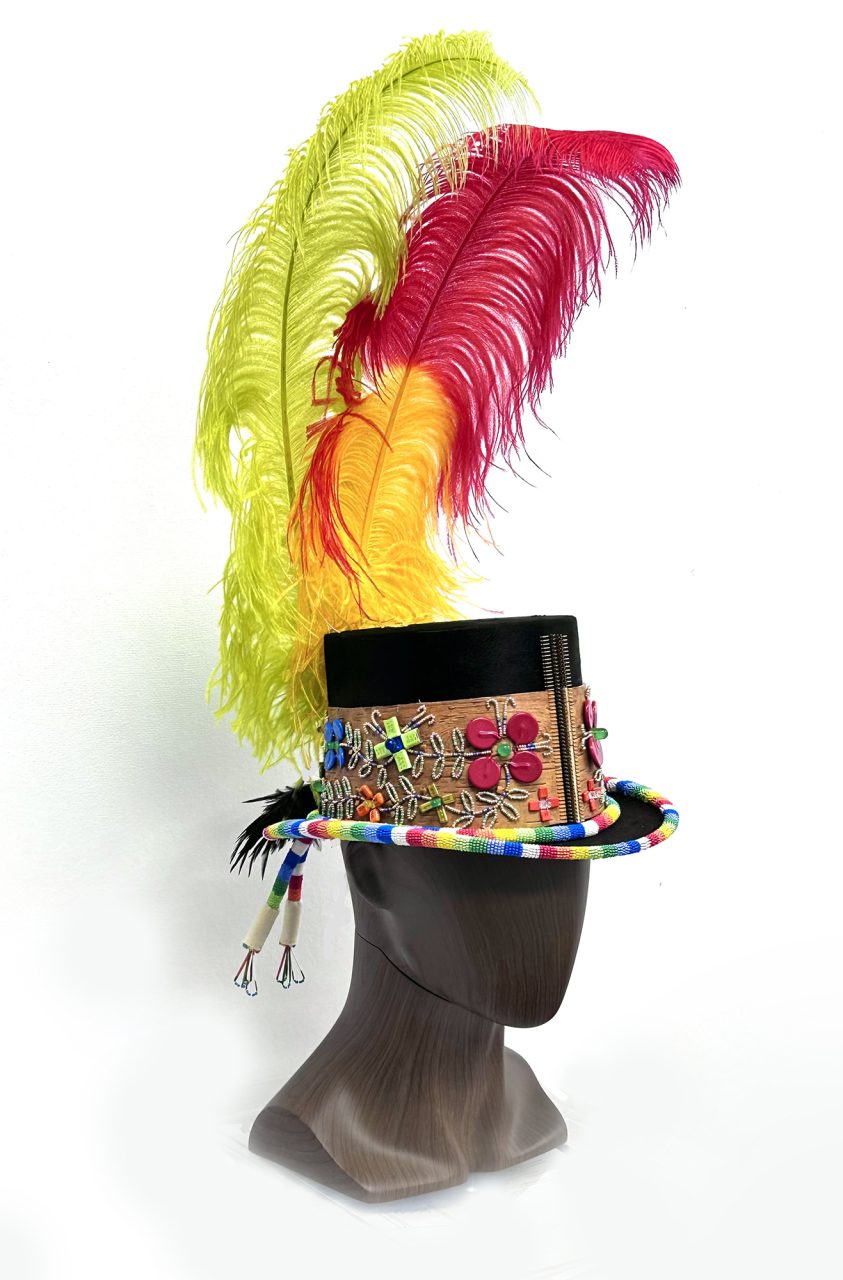 Ogimaa-wiiwkwaan (Chief's Hat) (2025) Found vintage 19th century beaver-fur top hat, birchbark, electronic components, glass beads, hide, ostrich feathers, stroud material, rooster feathers, rope, porcupine quills. 91 x 35 x 40 cm. Collection of the Artist.
 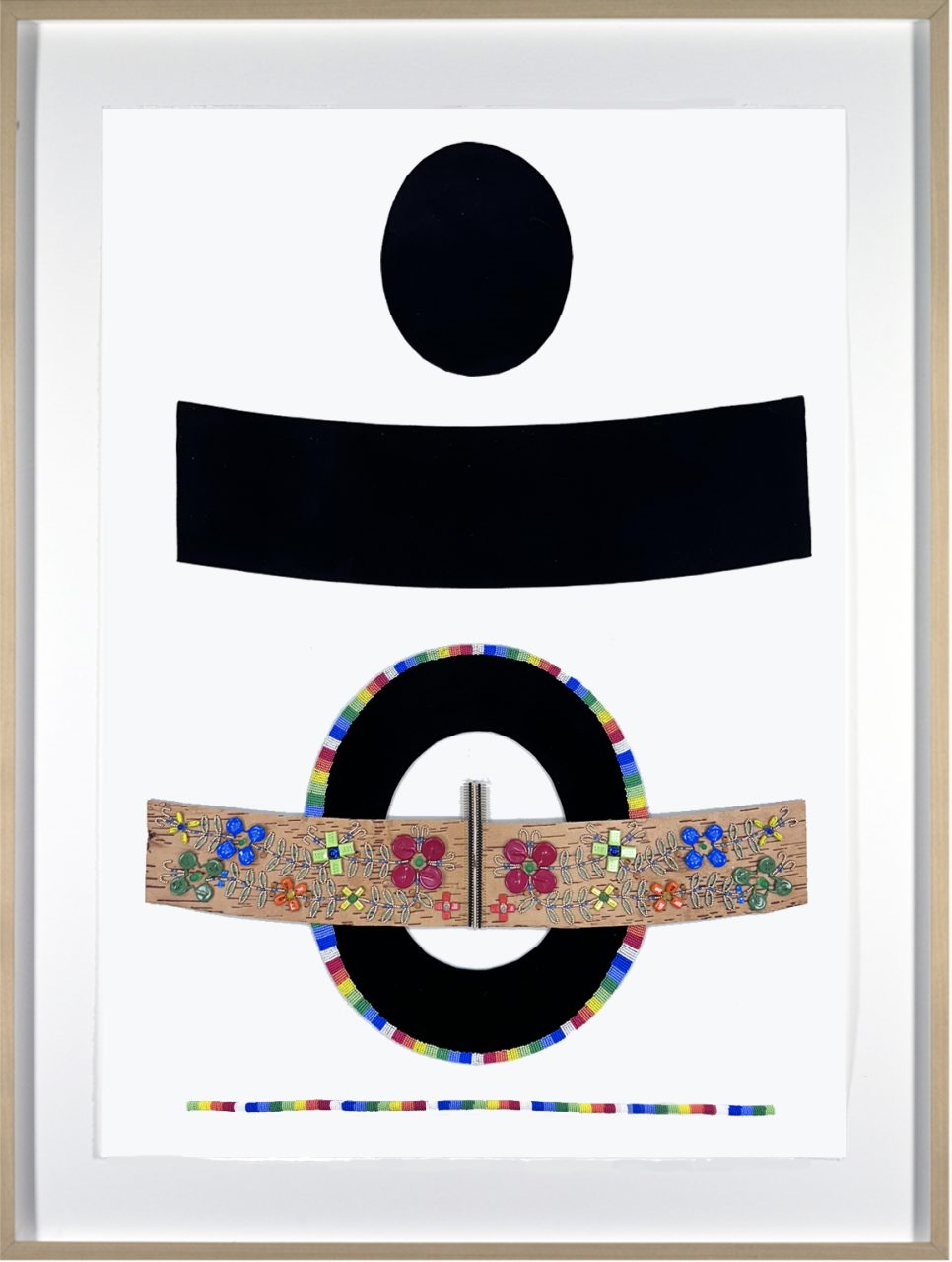 Convergence of Dissonant Parts (2025) Velvet, Pellon©, birchbark, electronic components, glass beads, hide, and rope on paper. 125 x 94 cm. Collection of the Artist.
 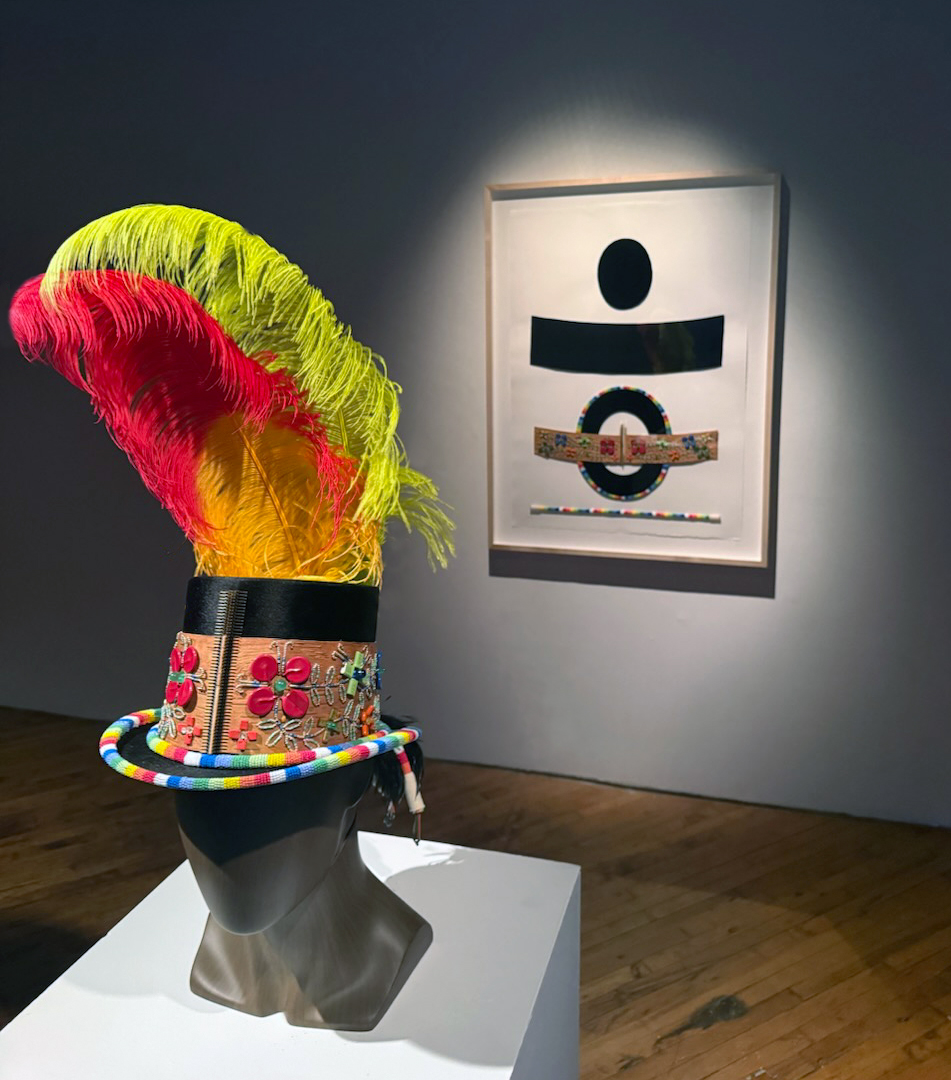 Indigenous Fashion Arts: Reverence and Conviction @ YYZ (Toronto).
 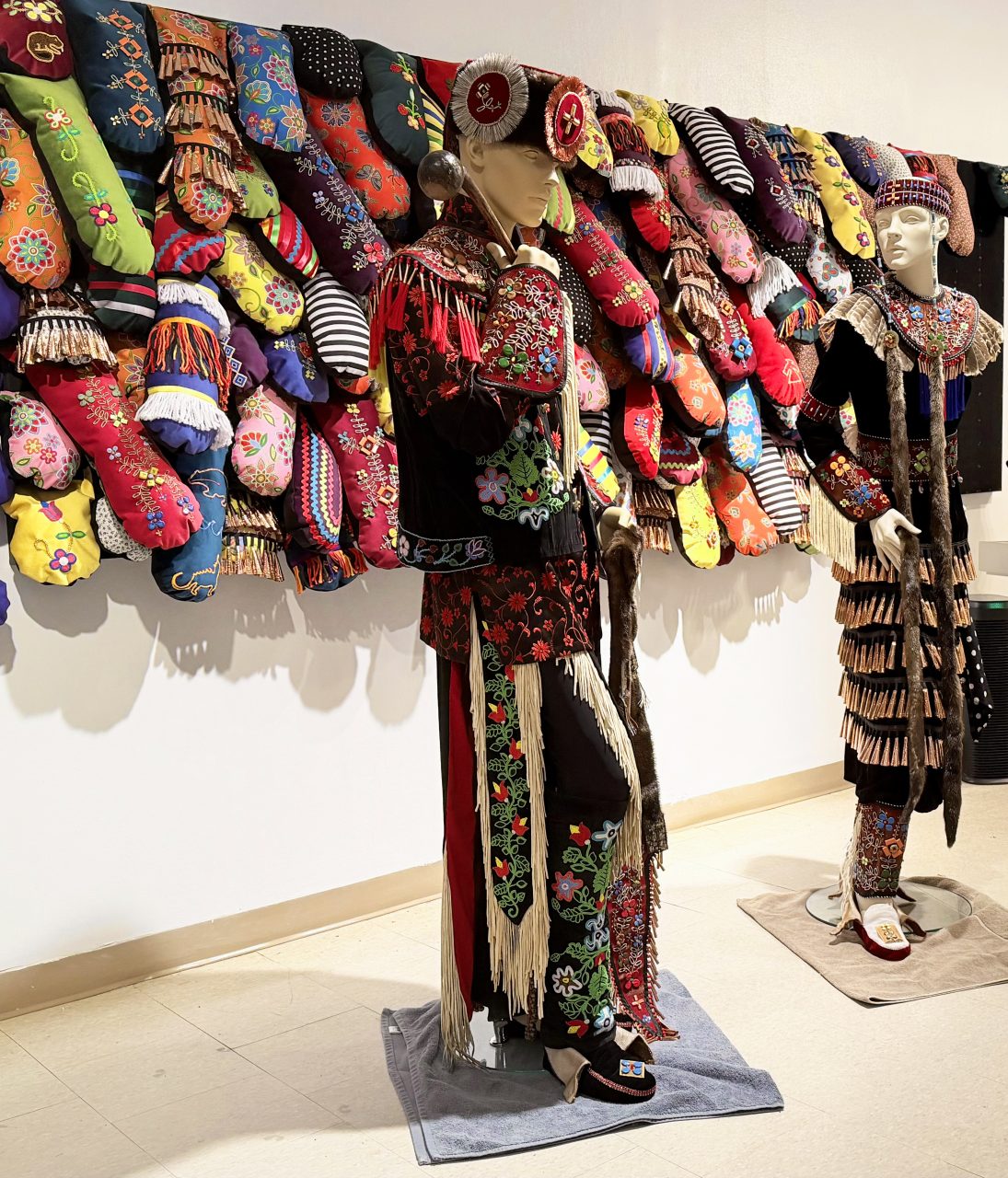 Grand Entry (large-scale installation work-in-progress) (2026) mixed media 121.92 x 487.68 cm. Collection of the Artist.
 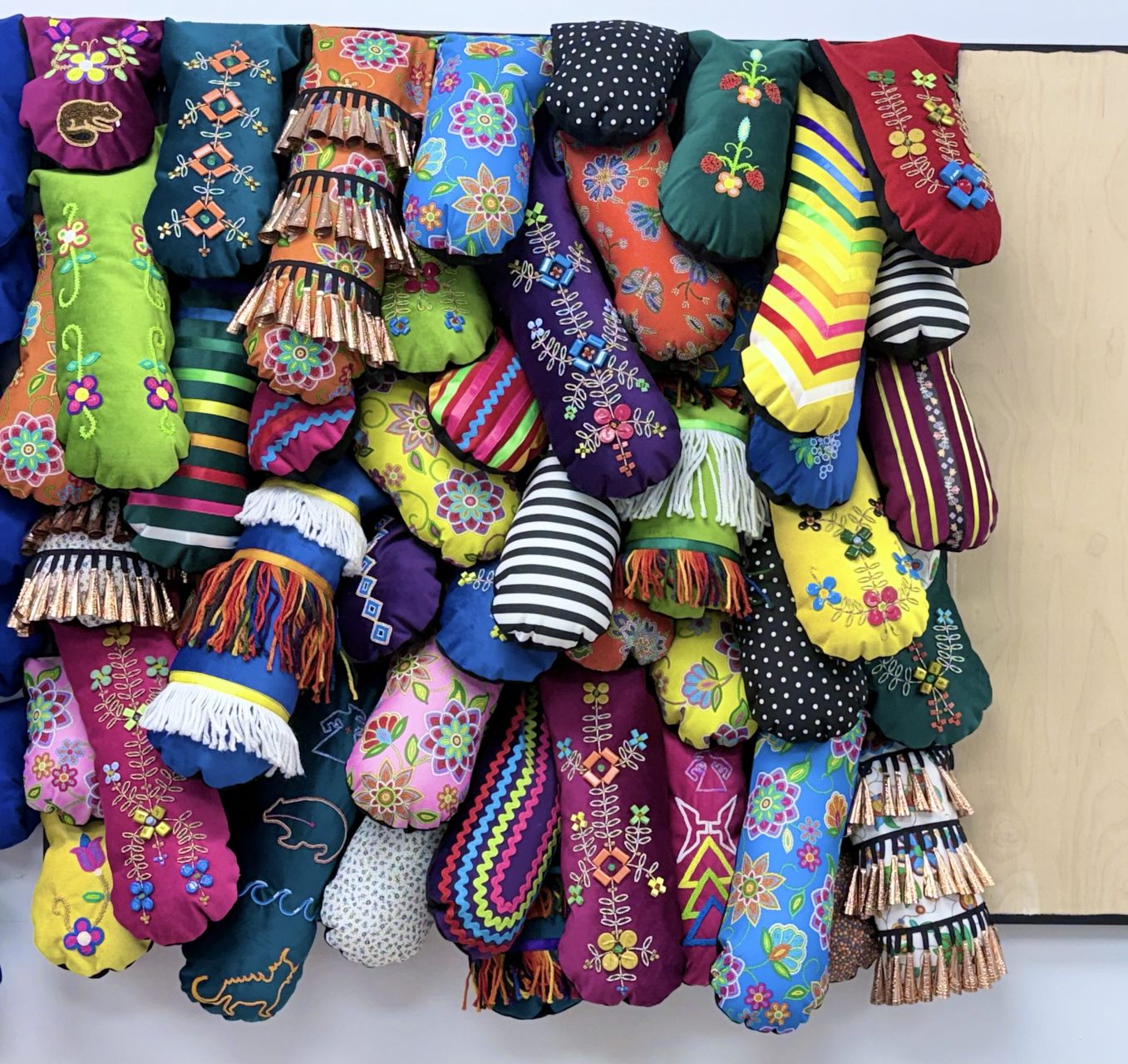 Grand Entry (large-scale installation work-in-progress detail) (2026) mixed media 121.92 x 487.68 cm. Collection of the Artist.
  Barry Ace - Grand Entry Men's Traditional, Manito Ahbee, Winnipeg, Manitoba