To view photo images of works, scroll right on laptop or down on Iphone
A Piercing of Ancestral Time / Une percée au coeur du temps ancestral.
Barry Ace and Adrian Stimson. Galerie Orenda, Paris, (France).
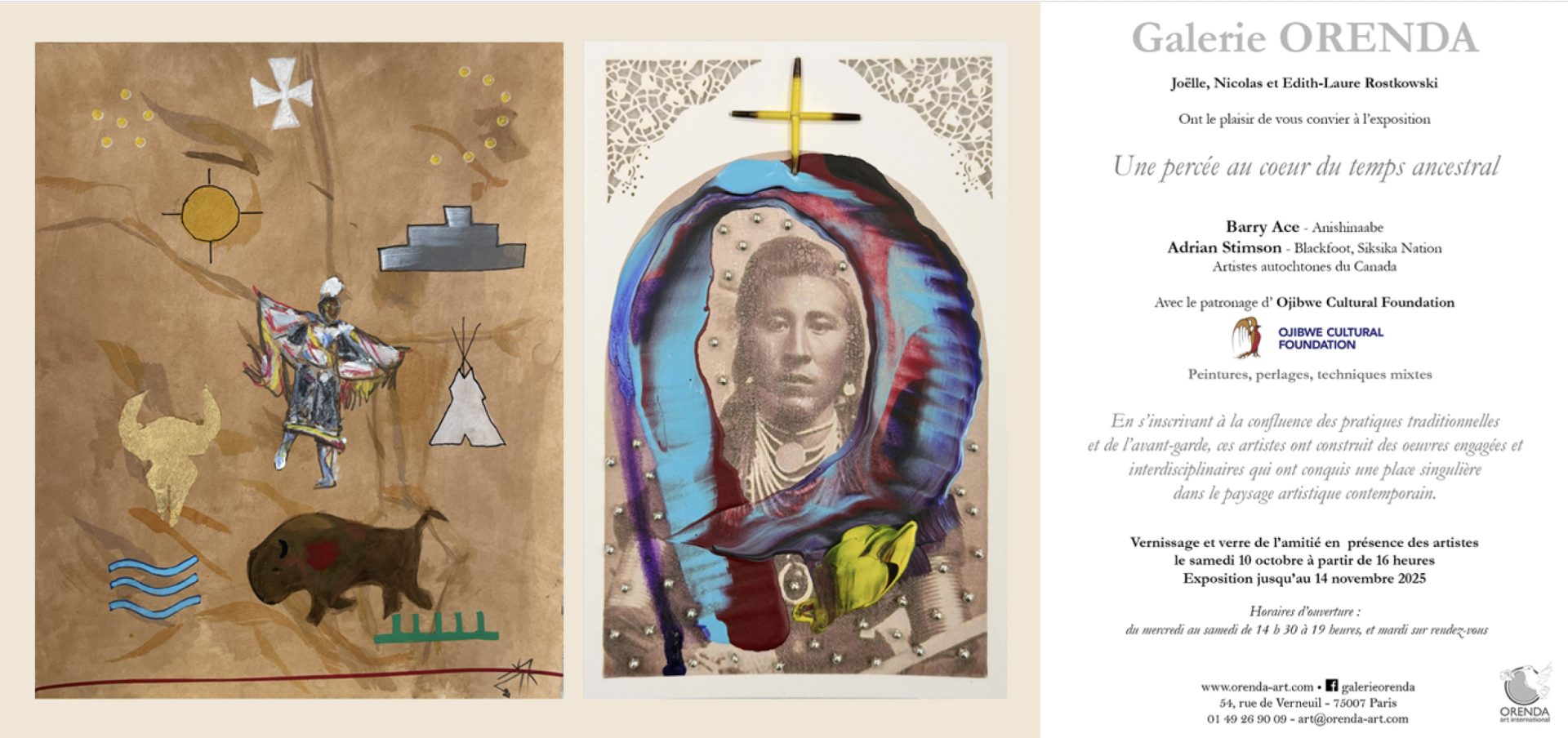
Downloadable invitations (horizontal or vertical)
Vernisage: Saturday, October 10, 2026 – 15:00 to 19:00 ( Barry Ace and Adrian Stimson in attendance).
Exhibition dates: October 10 to November 14, 2026.
GALERIE ORENDA
54 rue de Verneuil (7e arrondissement)
75007 Paris (France).
Open Wednesday to Saturday from 14:30 to 19:00
and Tuesday by appointment only.
Métro: rue du Bac / Solférino.
Parking/Stationnement: Musée d’Orsay.
Email: ar*@********rt.com
(+33) 1 49 26 90 09
(+33) 6 73 79 45 18
Galerie Orenda and Barry Ace gratefully acknowledge the generous endorsement and sponsorship of the exhibition by the Ojibwe Cultural Foundation (M’Chigeeng, Manitoulin Island).
About Galerie Orenda: Founded in 2008, Galerie Orenda is situated in the heart of Paris’s historic Left Bank. Since its inception, the gallery has served as a distinguished intercultural platform dedicated to fostering dialogue between Indigenous and international artistic traditions, with a particular commitment to contemporary Native American, Inuit, and First Nations art alongside European and global voices. Inspired by the intellectual and artistic legacy of the renowned critic and publisher Gualtieri di San Lazzaro, founder of the influential review XXe Siècle, the gallery seeks to create meaningful encounters between cultures while expanding international recognition for Indigenous artists.
Over the years, Galerie Orenda has presented thematic exhibitions featuring such acclaimed artists as N. Scott Momaday, Preston Singletary, Robert Houle, Tony Abeyta, David Bradley, Michael Nicoll Yahgulanaas, and Holly Wilson, among many others. Through these exhibitions, Galerie Orenda have sought to illuminate both the continuity of ancestral knowledge and the vitality of contemporary Indigenous expression. Under the continued stewardship of the Rostkowski family, Galerie Orenda remains devoted to artists whose work bridges innovation and tradition, connecting contemporary practice with enduring cultural memory.
About the Exhibition: A Piercing of Ancestral Time brings together artist Adrian Stimson (Blackfoot, Siksika Nation) and artist Barry Ace (Anishinaabe-Odawa, M’Chigeeng First Nation) through a focused presentation of paintings and works on paper that reimagine surface as a site of temporal rupture and cultural continuity. Here, the canvas and paper becomes more than a ground—it is a membrane through which ancestral presence pierces into the present.
Adrian Stimson’s work moves between painting, performance, and installation, yet at its core lies a sustained engagement with the canvas as a site of memory, rupture, and resurgence. Rooted in Blackfoot ways of knowing, his practice confronts colonial histories not as distant events, but as ongoing conditions inscribed onto land, body, and image. Through layered surfaces, gestural mark-making, and recurring motifs, Stimson constructs paintings that hold tension between presence and absence—where what is obscured carries as much weight as what is revealed.
His work often draws on archival fragments, personal narrative, and spiritual invocation, collapsing temporal boundaries to activate ancestral knowledge in the present. Paint becomes a conduit for this activation: at times visceral and raw, at others meditative and restrained. These surfaces do not seek resolution; instead, they insist on complexity, acknowledging histories of violence while asserting Indigenous survivance and continuity.
In Stimson’s paintings, the canvas is not a passive ground but a living field—one that bears witness, resists erasure, and affirms the persistence of Siksika identity. His work invites viewers to engage with time as layered and cyclical, where past and present are in constant dialogue, and where acts of creation become forms of cultural and political resurgence.
In parallel, Barry Ace’s works on paper and canvas extend beadwork into a contemplative field of inscription—where mark, pattern, and continuity converge as a form of temporal thinking rather than image-making. Working across drawing, printmaking, and mixed media, Ace approaches surface not as support but as threshold: a liminal field charged with relational forces, where the logic of the bead is transmuted into visual language.
Repetition functions as an incantation. Each mark resonates as a mnemonic pulse, echoing the placement of a bead, accumulating into constellatory systems that evoke ancestral knowledge and Indigenous technologies of making. These accumulations do not depict order so much as reveal it as emergent—an unfolding geometry of relation, breath, and interval.
His compositions move between restraint and density, where minimal gestures open into intricate, almost vibrational architectures. Lines, points, and geometries drift between circuitry, celestial mapping, and migratory pathways—diagrams of movement across time rather than space. At moments, beads intervene materially, puncturing the pictorial field and reasserting the objecthood of memory itself, as if the surface were briefly made porous to another dimension of presence.
Ace’s works resist fixed reading; they operate instead as sustained perceptual encounters. Time is not represented but accrued—woven through repetition, care, and return. Grounded in Anishinaabe cosmologies, his practice frames making as continuity without origin or end, where each mark is both echo and emergence, carrying memory forward while opening onto what is yet to come.
Together, the works of these two artists challenge the fixity of painting as a static medium. Instead, they propose the canvas as an active site of transmission, where Indigenous knowledge systems are not illustrated but enacted. A Piercing of Ancestral Time invites viewers to encounter painting as a living continuum—one that punctures colonial chronologies and affirms Indigenous presence as enduring, adaptive, and sovereign.
Confluences: Ancestral Worlds, The Porous Present (Series) brings together historical Indigenous leaders whose lives and legacies intersect across nations, cultures, material culture, and time. At its centre is Maungwudaus, the Mississauga Anishinaabe leader, performer, translator, herbalist, and cultural ambassador, whose journeys across North America and travels through England, Ireland, France, and Belgium in the mid-1800s brought Indigenous presence into encounters with Western audiences while asserting Indigenous agency. Alongside him are Anishinaabe Chief Oshawana, who stood with Tecumseh in defence of Indigenous homelands during the War of 1812 and preserved objects entrusted to him after Tecumseh’s death, and Anishinaabe Hole-in-the-Day the Younger, whose diplomacy navigated the political upheavals of U.S. expansion and Minnesota statehood. Northern Arapaho George Shakespeare likewise embodied these trans-Atlantic crossings, travelling from Oklahoma to London and throughout Europe. Chief James Garfield Velarde of the Jicarilla Apache advocated for education and the future of his people. These figures represent only a small number of Indigenous leaders whose lives, contributions, and struggles for sovereignty, self-determination, and the continuity of their nations have been obscured within dominant historical narratives. Together, with material culture works like Quill, Bead, Pixel and Artifact 2.0 they resist confinement to the past. Canvas and paper become porous membranes through which ancestral presence, material culture, memory, sovereignty, and multiple temporalities converge, allowing these histories and legacies to pierce into the present.
Barry Ace, August 2026
____________________________________
Une Percée au Coeur du Temps Ancestral réunit l’artiste Adrian Stimson (Blackfoot, Siksika Nation) et l’artiste Barry Ace (Anishinaabe-Odawa, M’Chigeeng First Nation) à travers une présentation ciblée de peintures et d’œuvres sur papier qui réinventent la surface comme lieu de rupture temporelle et de continuité culturelle. Ici, la toile et le papier deviennent plus que de simples supports : une membrane à travers laquelle la présence ancestrale perce dans le présent.
Le travail d’Adrian Stimson traverse la peinture, la performance et l’installation, mais s’ancre avant tout dans un engagement soutenu avec la toile comme espace de mémoire, de fracture et de résurgence. Enracinée dans les savoirs Blackfoot, sa pratique ne considère pas les histoires coloniales comme des événements lointains, mais comme des conditions toujours actives inscrites sur la terre, le corps et l’image. À travers des surfaces stratifiées, une gestuelle marquée et des motifs récurrents, Stimson construit des peintures où s’installe une tension entre présence et absence — où ce qui est voilé porte autant de poids que ce qui est révélé.
Son travail puise fréquemment dans des fragments d’archives, des récits personnels et des invocations spirituelles, abolissant les frontières temporelles pour activer le savoir ancestral dans le présent. La peinture devient un vecteur de cette activation : tantôt viscérale et brute, tantôt méditative et retenue. Ces surfaces ne recherchent pas la résolution ; elles revendiquent la complexité, reconnaissant les histoires de violence tout en affirmant la survivance et la continuité autochtones.
Dans les peintures de Stimson, la toile n’est pas un support passif mais un champ vivant — qui témoigne, résiste à l’effacement et affirme la persistance de l’identité siksika. Son travail invite à penser le temps comme stratifié et cyclique, où passé et présent dialoguent en permanence, et où l’acte de création devient forme de résurgence culturelle et politique.
En parallèle, les œuvres sur papier et sur toile de Barry Ace prolongent le perlage dans un champ d’inscription contemplatif — où marque, motif et continuité convergent comme une pensée du temps plutôt qu’une simple production d’images. À travers le dessin, la gravure et les techniques mixtes, Ace n’aborde pas la surface comme un support, mais comme un seuil : un espace liminaire chargé de forces relationnelles, où la logique du perle se transmue en langage visuel.
La répétition agit comme une incantation. Chaque marque résonne comme une pulsation mnésique, écho de la pose d’une perle, s’accumulant en systèmes constellaires qui évoquent des savoirs ancestraux et des technologies autochtones de fabrication. Ces accumulations ne décrivent pas un ordre : elles le révèlent comme émergent — une géométrie en devenir faite de relations, de souffle et d’intervalles.
Ses compositions oscillent entre retenue et densité, où des gestes minimaux s’ouvrent sur des architectures presque vibratoires. Lignes, points et formes géométriques circulent entre circuits, cartographies célestes et trajectoires migratoires — diagrammes du mouvement dans le temps plutôt que dans l’espace. Par moments, des perles interviennent matériellement, perforant le champ pictural et réaffirmant l’objectualité même de la mémoire, comme si la surface devenait brièvement poreuse à une autre dimension de présence.
Les œuvres d’Ace résistent à toute lecture figée ; elles se déploient plutôt comme des expériences perceptives prolongées. Le temps n’y est pas représenté, mais accumulé — tissé par la répétition, le soin et le retour. Ancrée dans les cosmologies anishinaabe, sa pratique envisage la création comme une continuité sans origine ni fin, où chaque marque est à la fois écho et émergence, portant la mémoire vers l’avant tout en ouvrant sur ce qui vient.
Ensemble, les œuvres de ces deux artistes remettent en question la fixité de la peinture en tant que médium statique. Elles proposent plutôt la toile comme un site actif de transmission, où les systèmes de savoirs autochtones ne sont pas illustrés mais activés. Une Percée au Coeur du Temps Ancestral invite à envisager la peinture comme un continuum vivant — qui perce les chronologies coloniales et affirme une présence autochtone durable, adaptable et souveraine.
Confluences : Mondes ancestraux et le présent poreux (série) rassemble des chefs autochtones historiques dont les vies et les héritages s’entrecroisent à travers les nations, les cultures, la culture matérielle et le temps. En son centre se trouve Maungwudaus, le dirigeant mississauga anishinaabe, artiste, traducteur, herboriste et ambassadeur culturel, dont les périples à travers l’Amérique du Nord et les voyages en Angleterre, en Irlande, en France et en Belgique au milieu des années 1800 ont confronté le public occidental à la présence autochtone tout en affirmant l’agentivité de son peuple. À ses côtés figure le chef Oshawana, un Anishinaabe qui s’est tenu aux côtés de Tecumseh pour défendre les terres natales autochtones pendant la guerre de 1812 et a préservé les objets qui lui avaient été confiés après la mort de Tecumseh, ainsi que Hole-in-the-Day le Jeune, un Anishinaabe dont la diplomatie a navigué à travers les bouleversements politiques de l’expansion américaine et de la création de l’État du Minnesota. George Shakespeare, du peuple de l’Arapaho du Nord, a lui aussi incarné ces traversées transatlantiques, voyageant depuis l’Oklahoma jusqu’à Londres et à travers toute l’Europe. Le chef James Garfield Velarde, de la nation Apache Jicarilla, s’est quant à lui fait l’avocat de l’éducation et de l’avenir de son peuple. Ces figures ne représentent qu’un petit nombre de chefs autochtones dont les vies, les contributions et les luttes pour la souveraineté, l’autodétermination et la continuité de leurs nations ont été occultées au sein des récits historiques dominants. Ensemble, aux côtés d’œuvres de culture matérielle telles que Quill, Bead, Pixel et Artifact 2.0, ils résistent à l’enfermement dans le passé. La toile et le papier deviennent des membranes poreuses à travers lesquelles convergent présence ancestrale, culture matérielle, mémoire, souveraineté et temporalités multiples, permettant à ces histoires et à ces héritages de transpercer le présent.
Barry Ace, août 2026
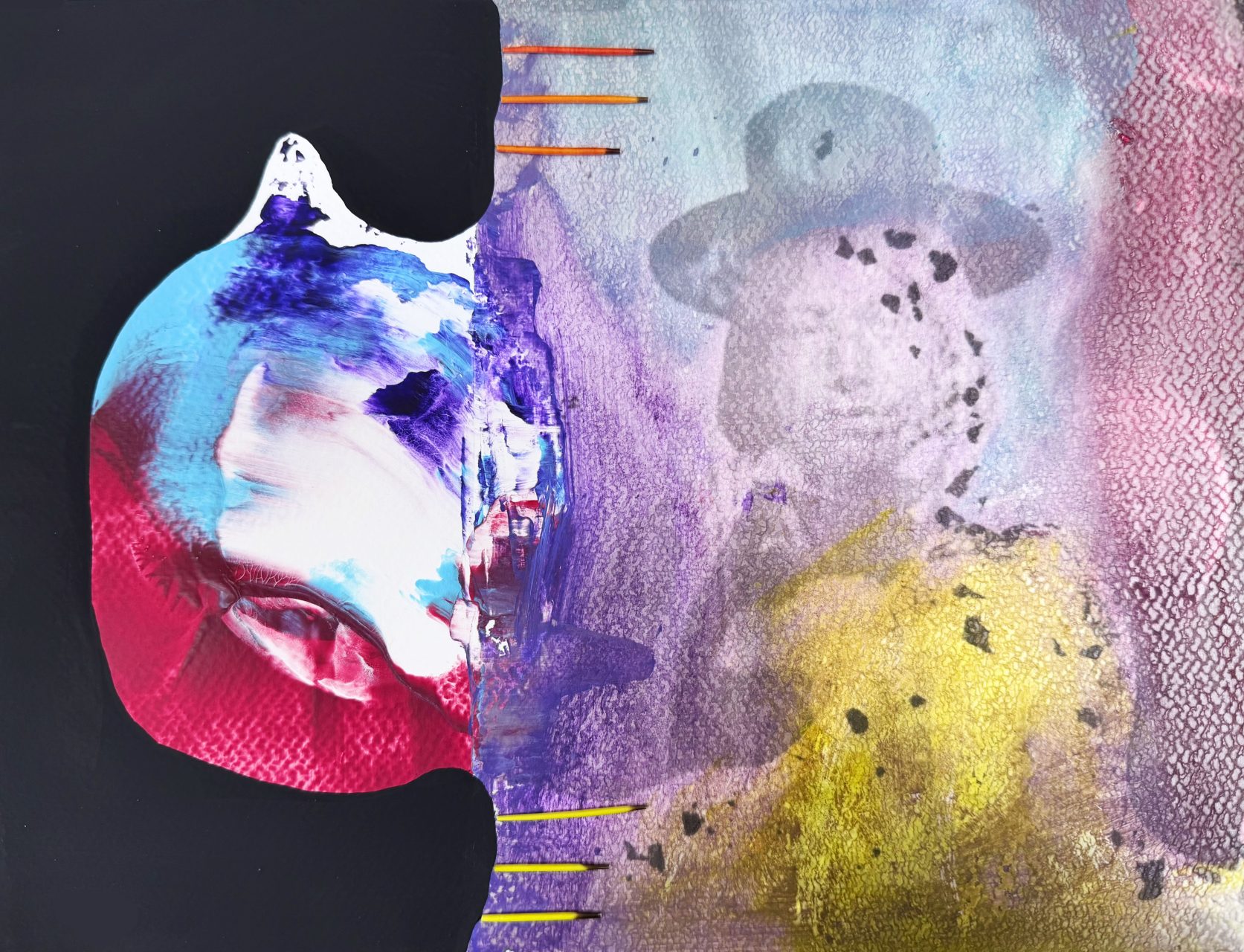 A Piercing of Ancestral Time (2026). mixed media on paper 20.32 x 25.4 cm. Collection of Artist.
  Maungwudaus: Through the Luminous Threshold of Skyworld, Middleworld and Underworld (2026) 48 cm x 106 cm, photo-transfer, acrylic, and glass beads on canvas. Collection of the Artist.
 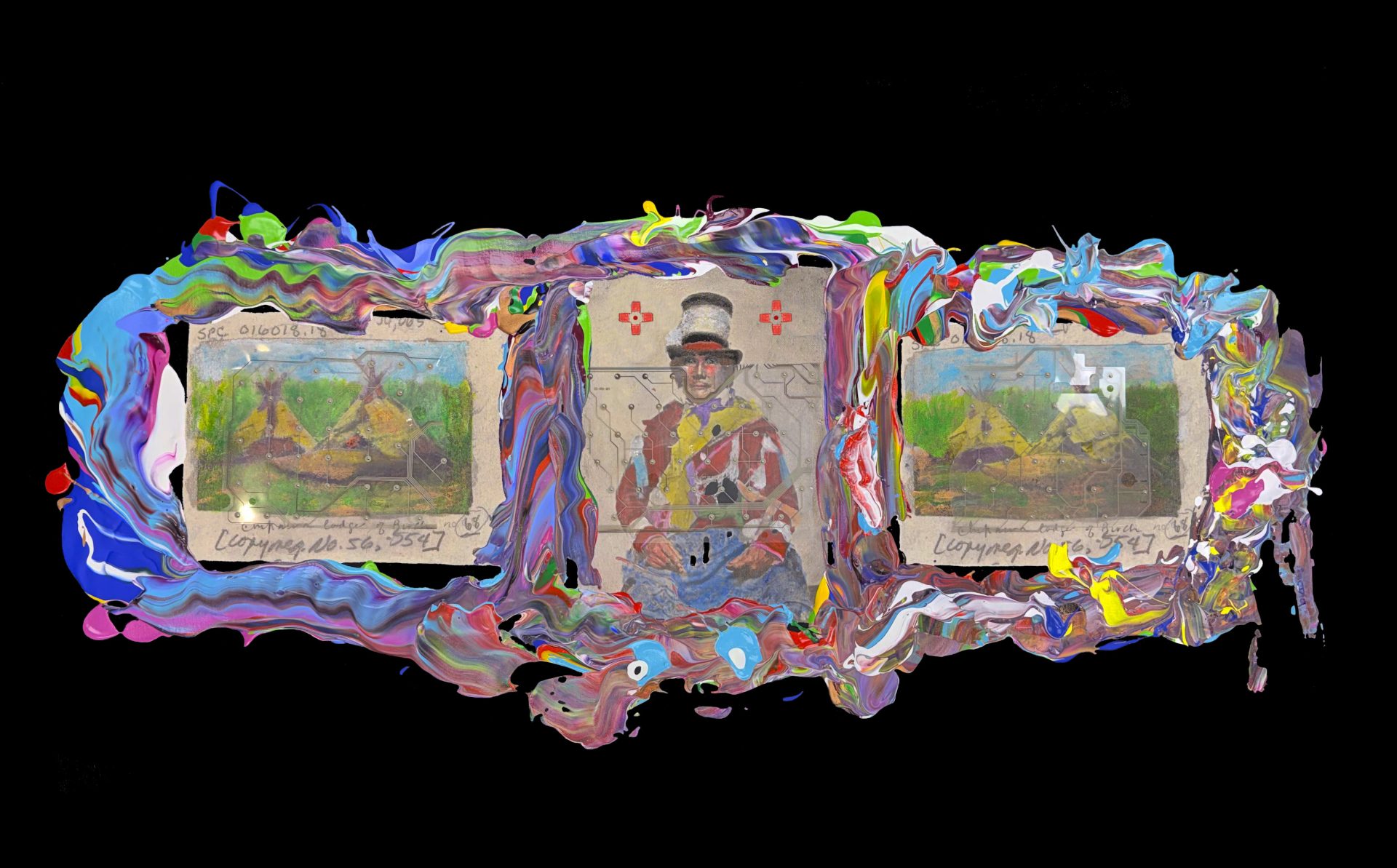 Encoded Resilience: Ogimaa Oshawana (2026) acrylic, canvas, photo-transfer, capacitors, glass beads, plastic keyboard template 111.76 x 58.42 cm. Collection of the Artist.
 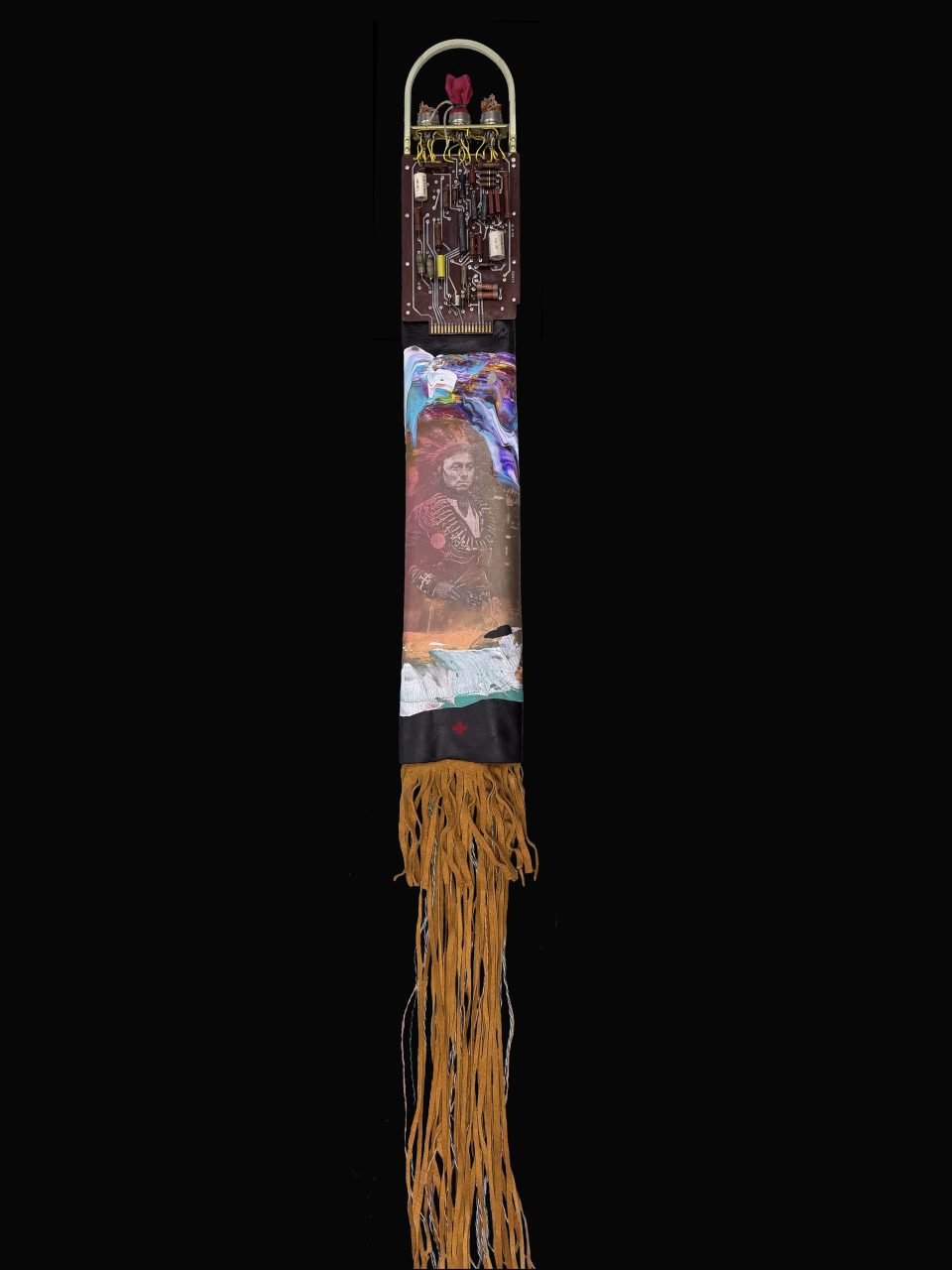 An Offering Across Ancestral Time: A Pipe Bag for Maungwudaus (2026) vintage circuit-board, photo transfer on canvas, acrylic, beads, coated wire, hide, velvet, tobacco. 133 x 15 cm. Collection of the Artist.
 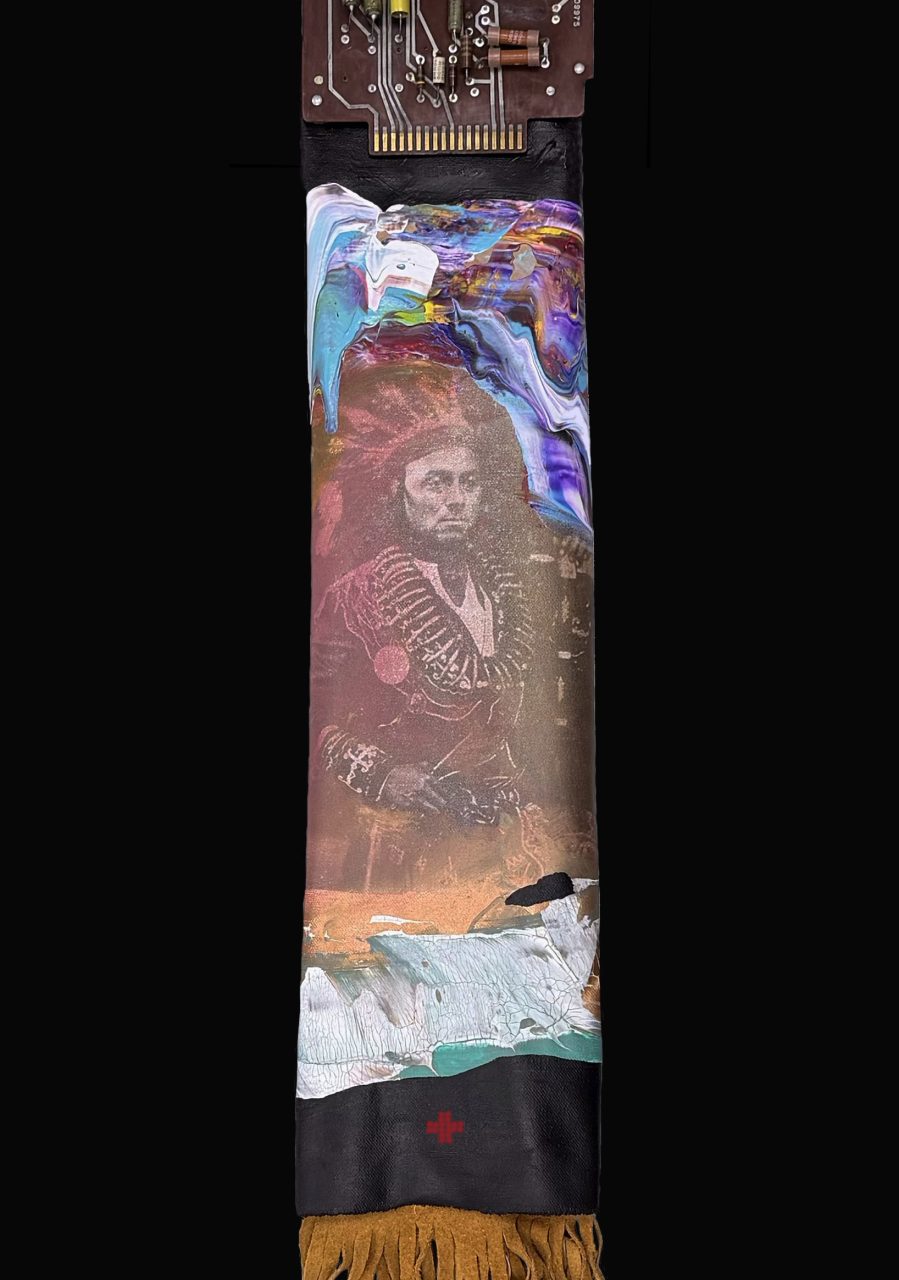 An Offering Across Ancestral Time: A Pipe Bag for Maungwudaus (2026) (detail) vintage circuit-board, photo transfer on canvas, acrylic, beads, coated wire, hide, velvet, tobacco. 133 x 15 cm. Collection of the Artist.
  Visceral Temporal Obscuration (2026) 22.9 x 30.5 cm, photo transfer, acrylic, porcupine quills, capacitors, resistors, glass beads, light emitting diode, silver-leaf on paper. Collection of the Artist.
 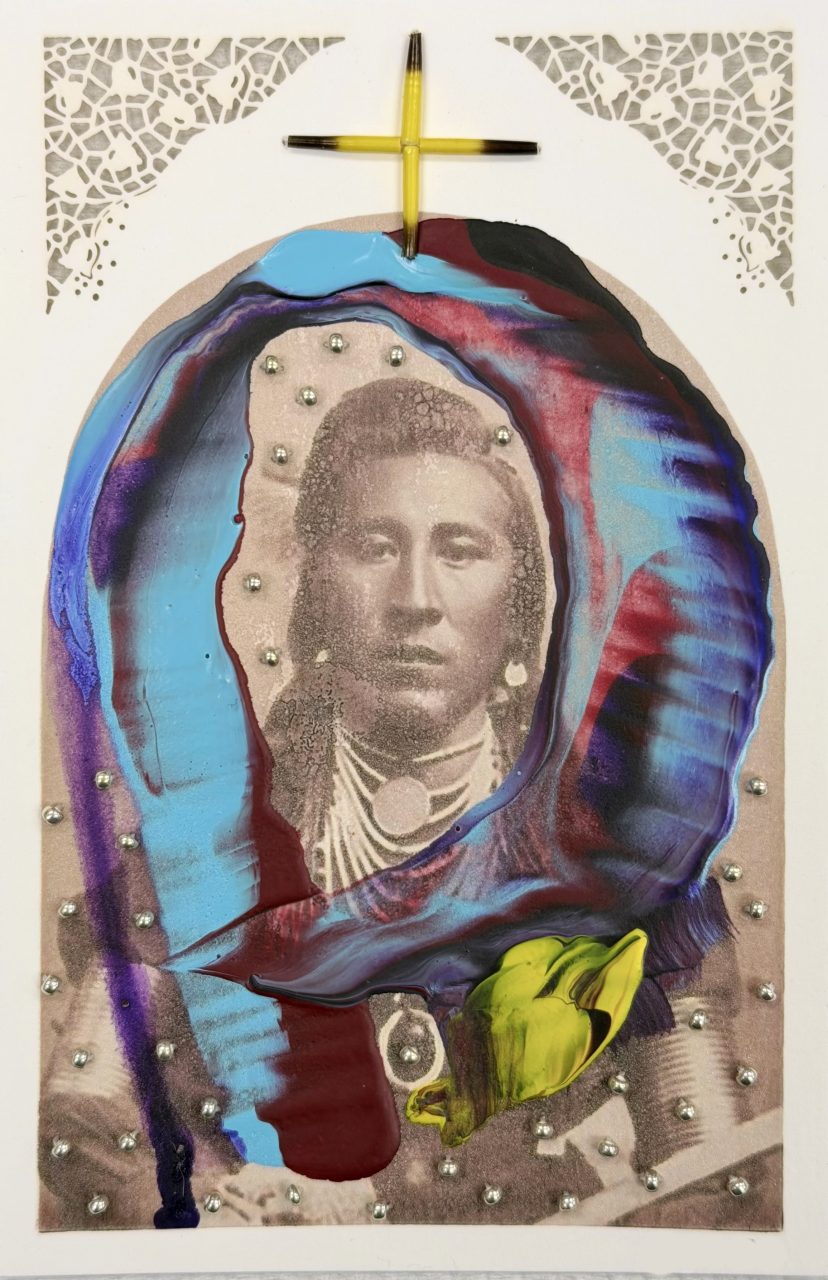 The Morning Star, Keeper of the Ancestors (2026) 8.89 x 12.7 cm, photo transfer, acrylic, porcupine quills, glass beads on laser cut paper. Collection of the Artist.
 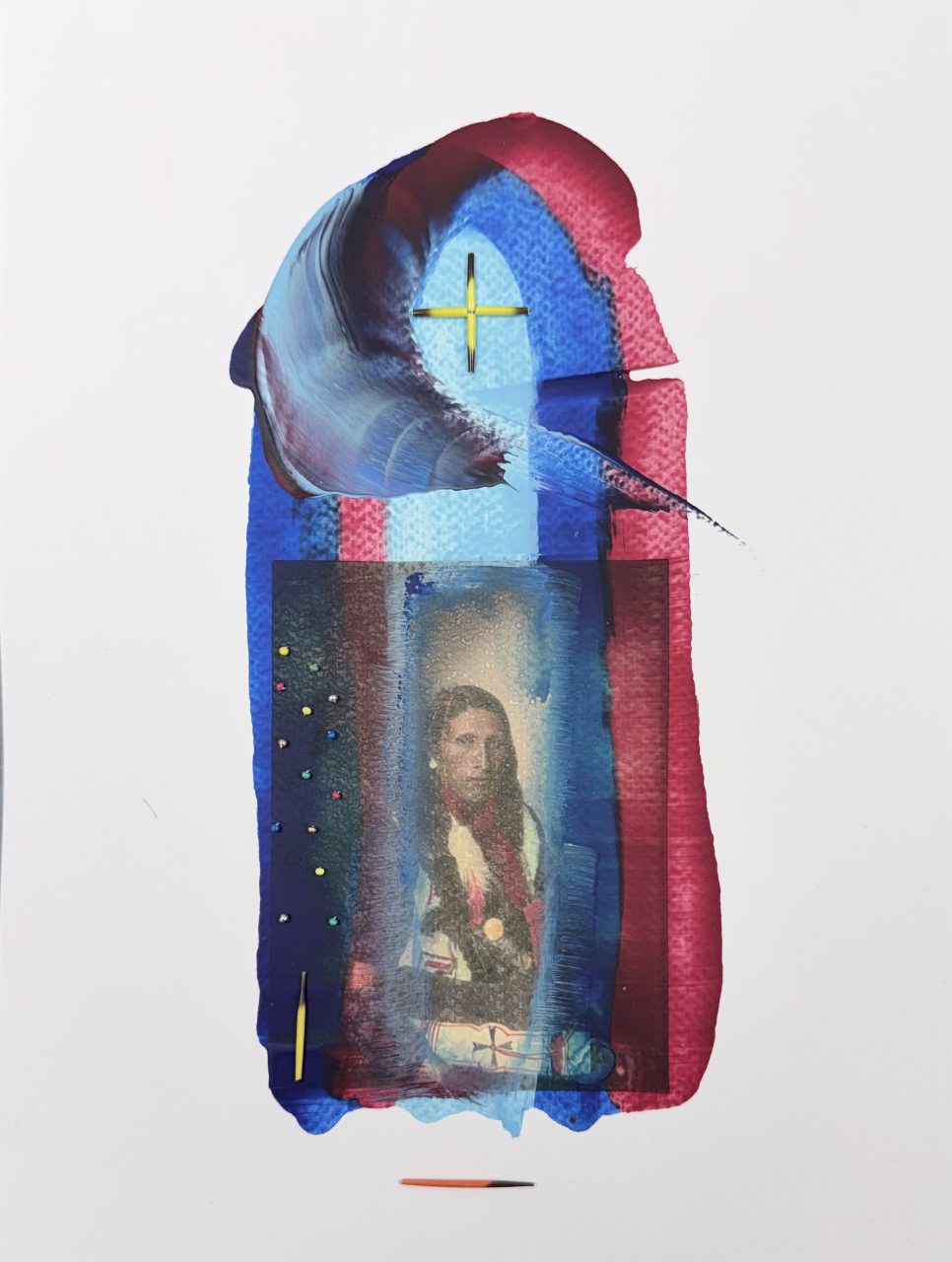 Where the Morning Star Remembers the Ancient Ones (2026) 22.9 x 30.5 cm photo transfer, acrylic, porcupine quills, glass beads on paper. Collection of the Artist.
  From the City of Lights, a Letter of Remembrance for the Ancestors Who Once Crossed the Vast Body of Water (2026) 15.88 x 22.86 cm, photo transfer and micro glass beads on decorative stationary. Private Collection, Paris, France.
 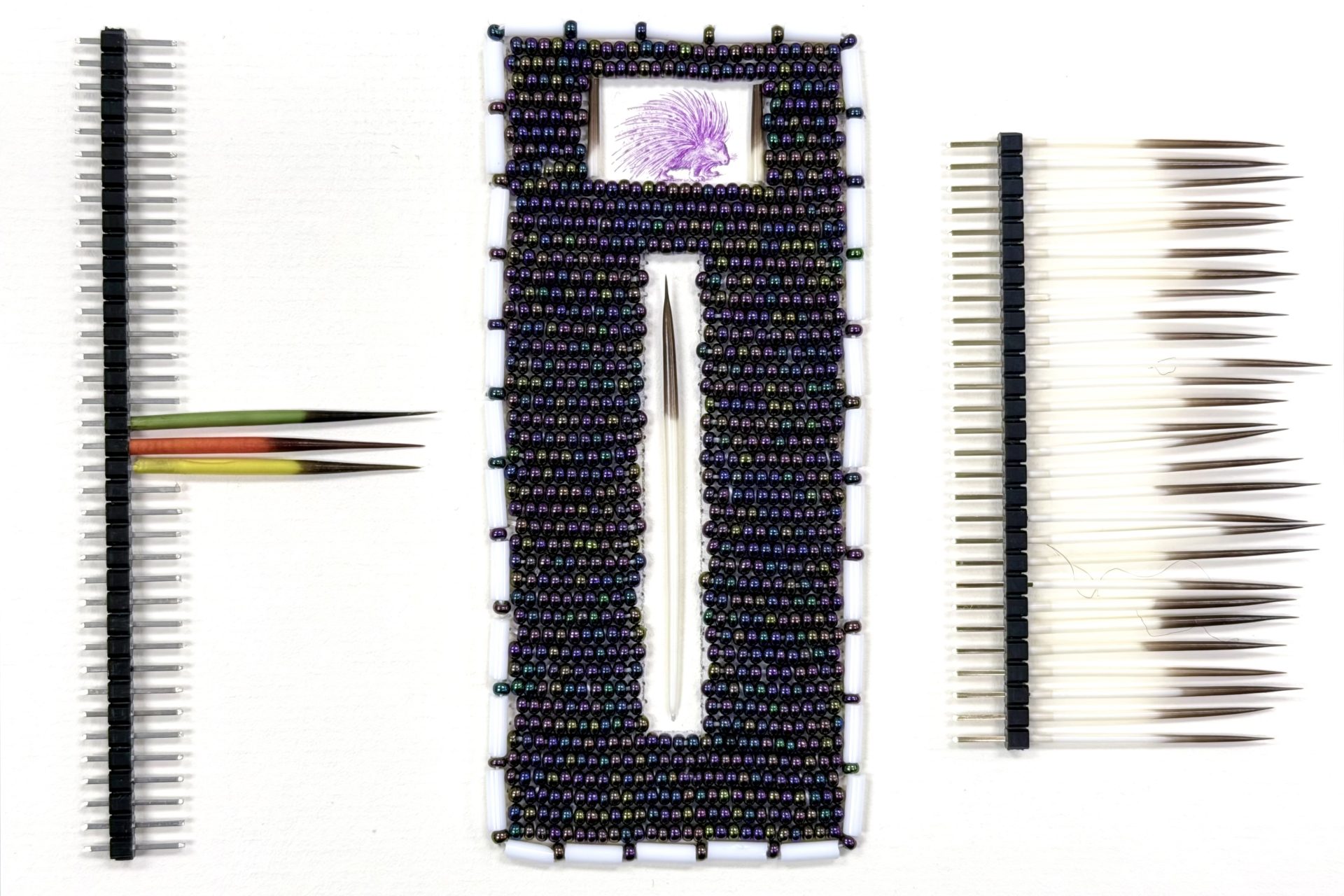 Artifact 2.0: Recoded History (2026) embossed paper, porcupine quills, electronic components, glass beads 8.89 x 12.7 cm. Private Collection, Paris, France (VENDU / SOLD).
 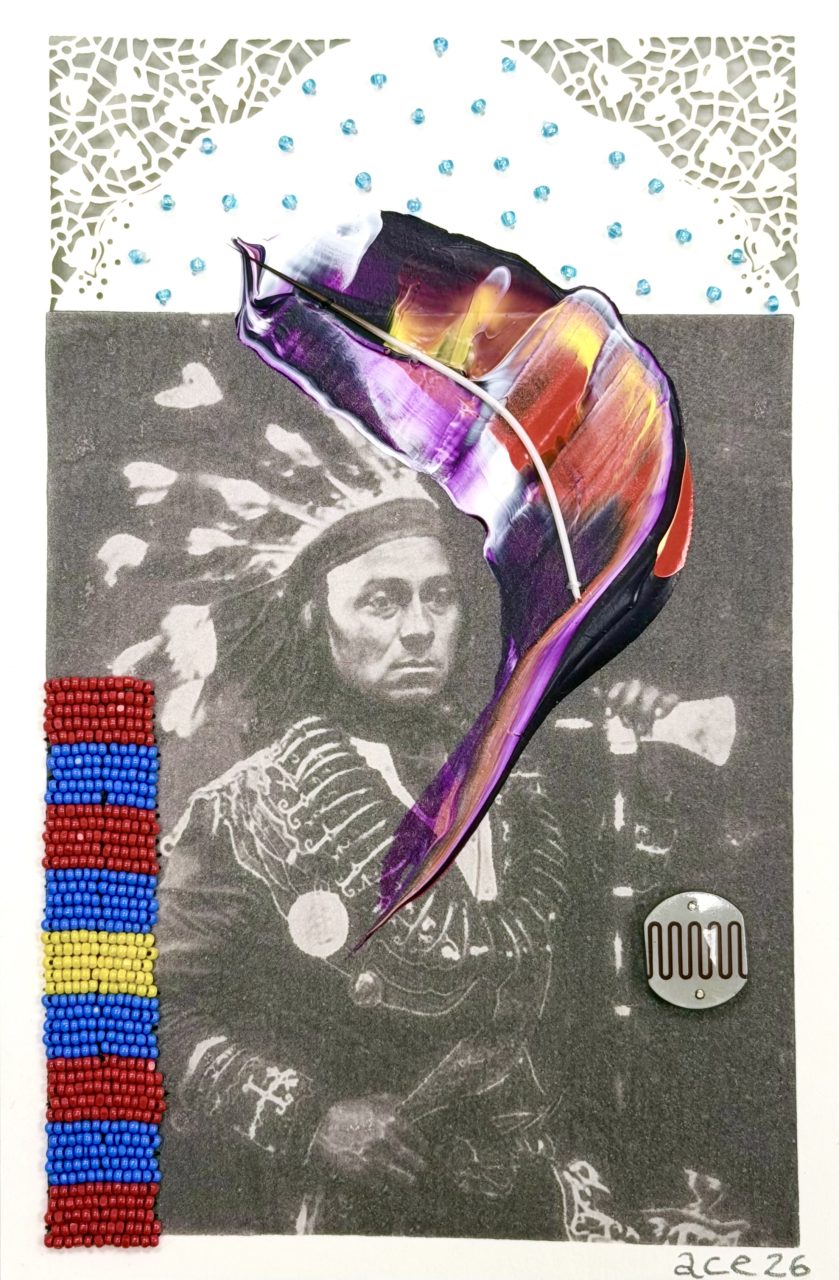 Maungwudaus 1845: Presence, Feather, and Calumet in Paris (2026) 8.89 x 12.7 cm, photo transfer, acrylic, porcupine quill, glass beads on laser cut paper. Collection of the Artist.
 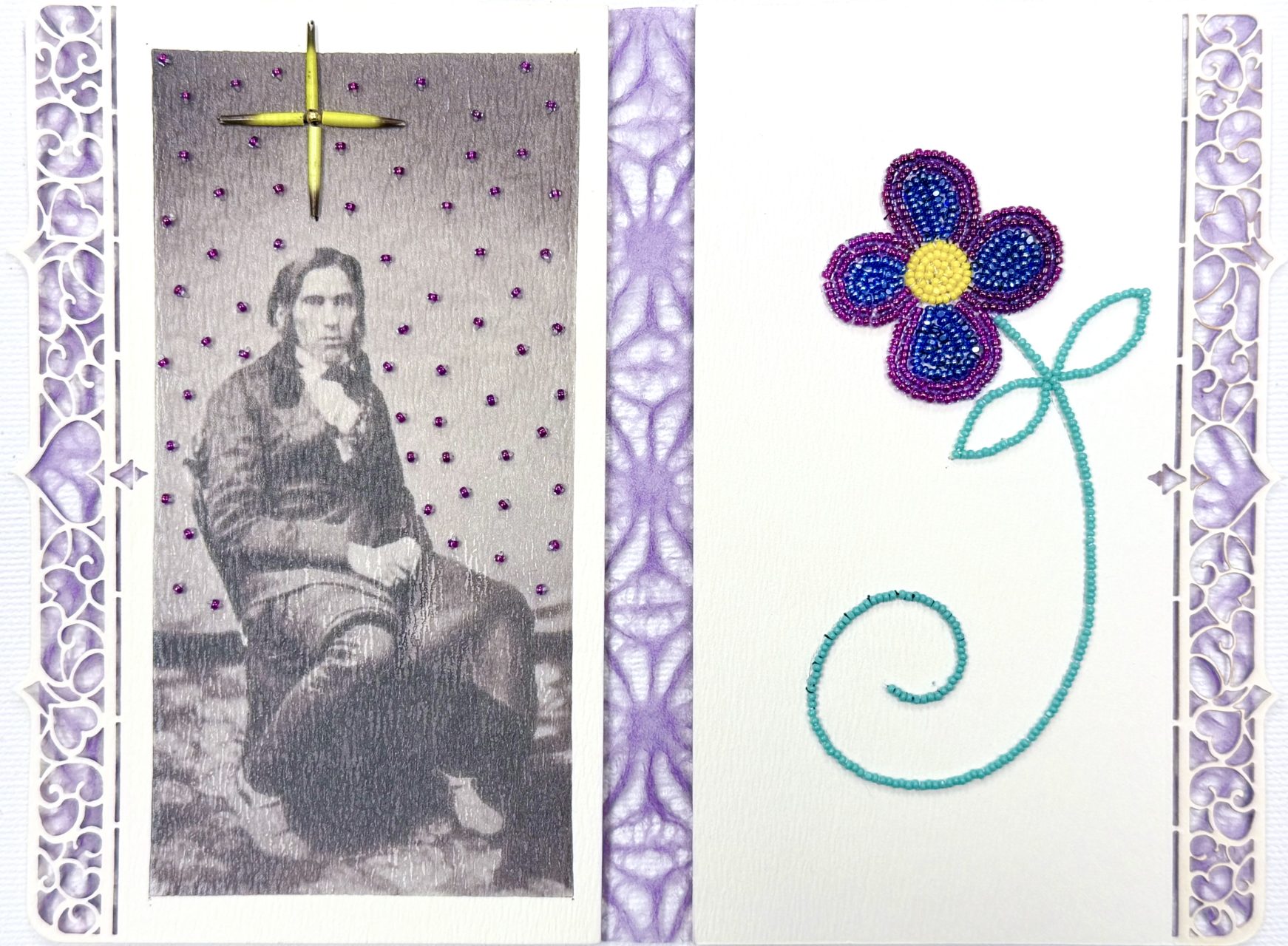 Bagone-giizhig (Hole in the Day): A Sacred Opening (2026) 18 x 12.7 cm photo-transfer, quills, beads, lace paper on laser cut paper. Collection of the Artist.
 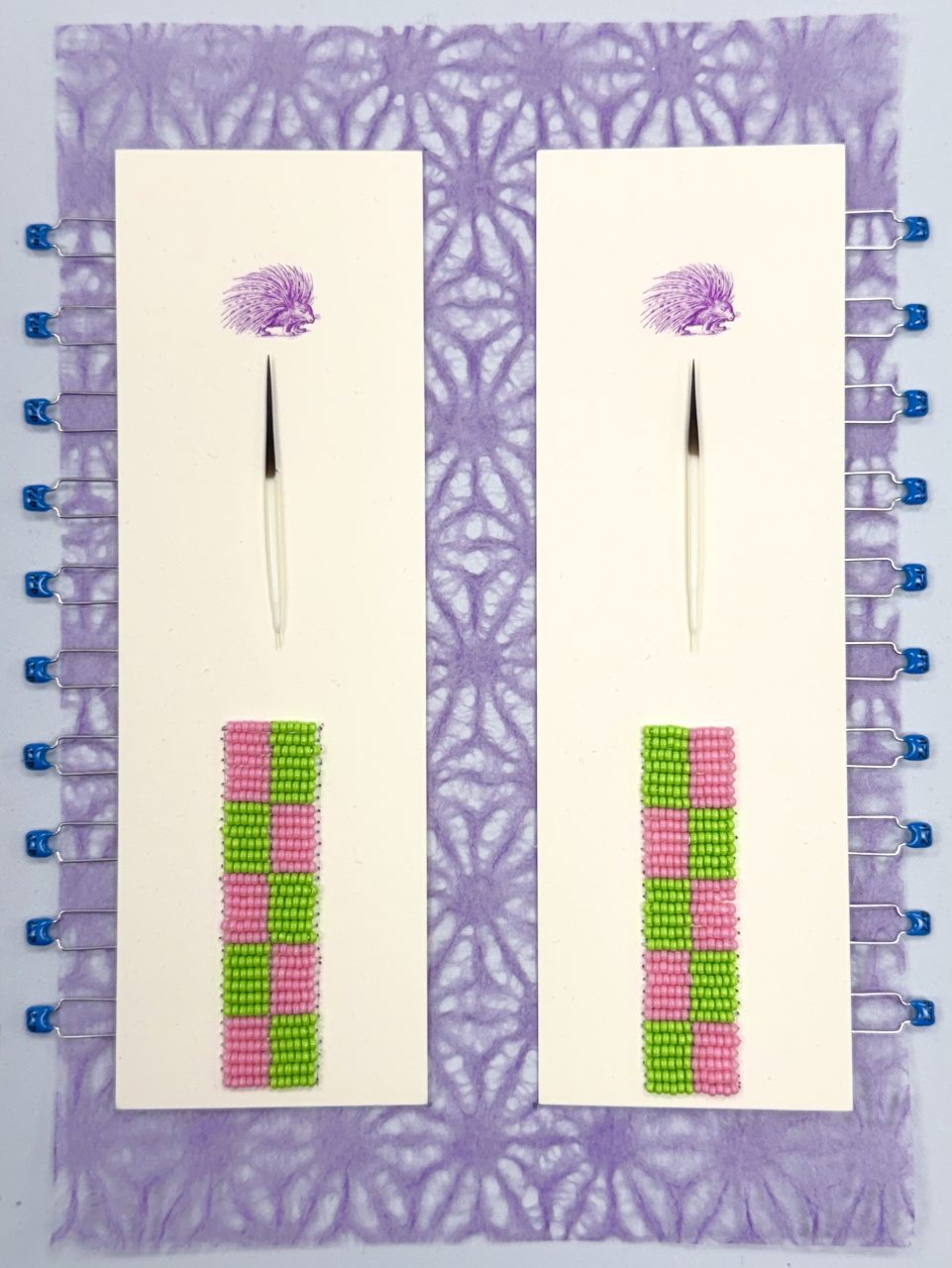 Quill, Bead, Pixel: Transformations in Time (2026) porcupine quills, beads, capacitors, lace paper, embossed paper 13 x 17cm. Collection of the Artist.
 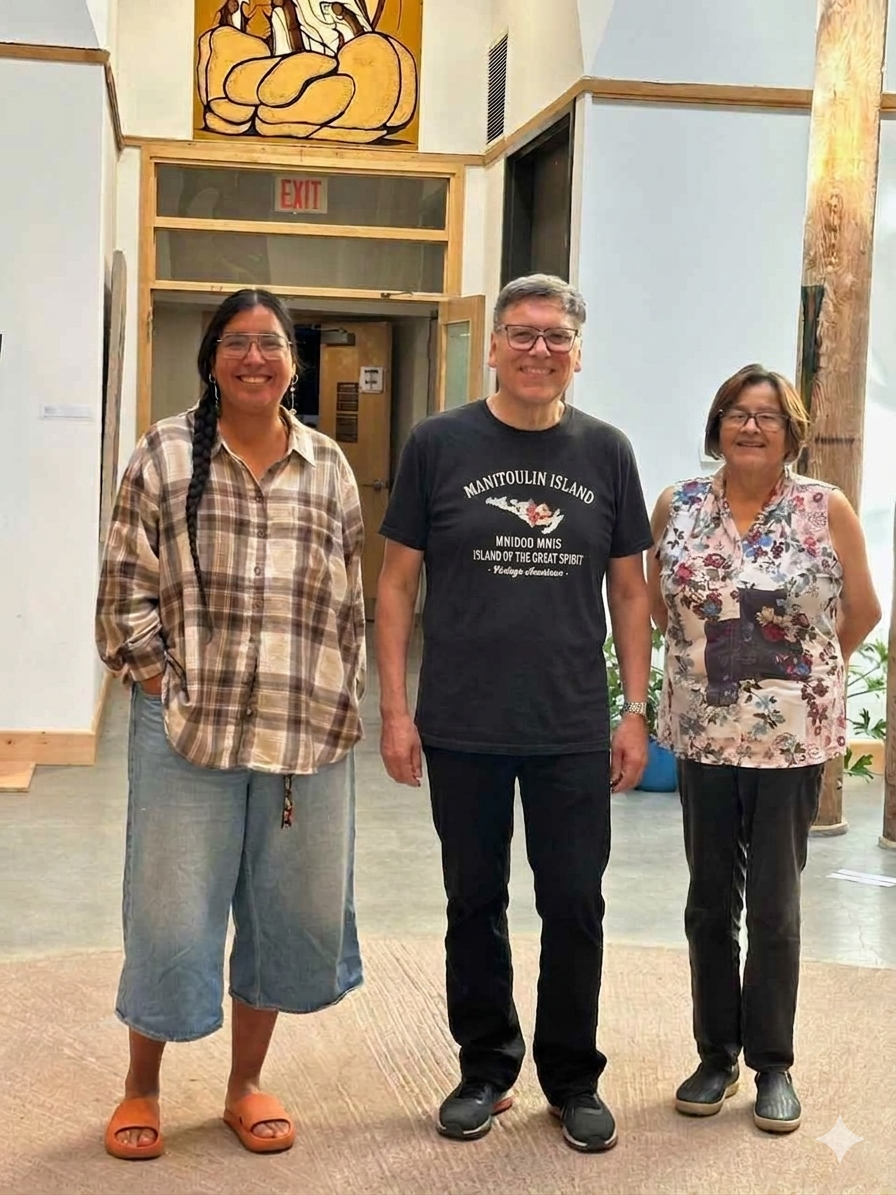 Shaelynn Recollect, Barry Ace, Sophie Corbiere - Ojibwe Cultural Foundation (M'Chigeeng) August 2026.
 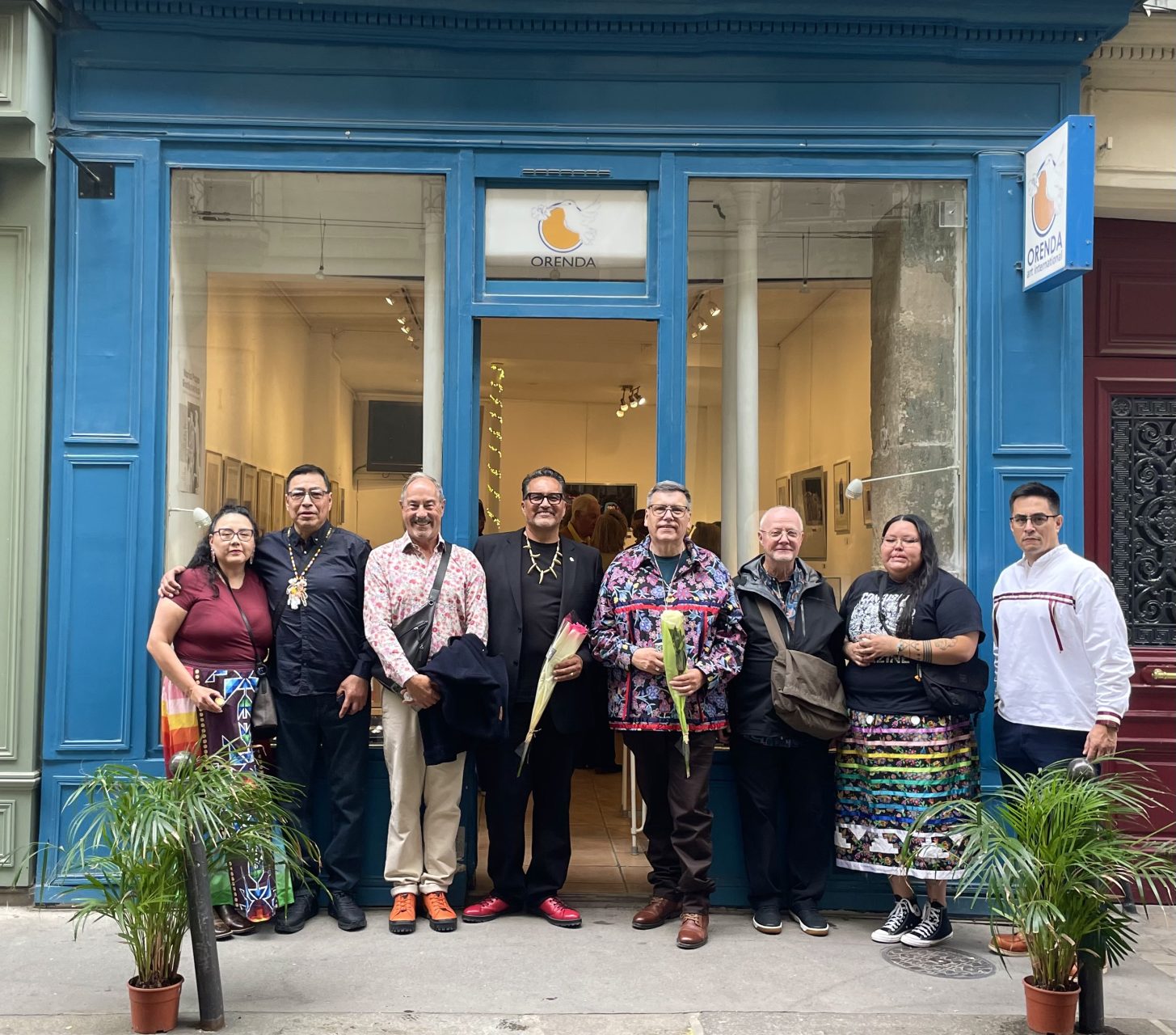 L to R Lori and Alex Scalplock, Ian Grove, Adrian Stimson, Barry Ace, Earl Truelove, Sikapinakii, and Chief Samuel Crowfoot (Siksika Nation). Galerie Orenda, Paris (France). Photo: Catherine Sicot.
 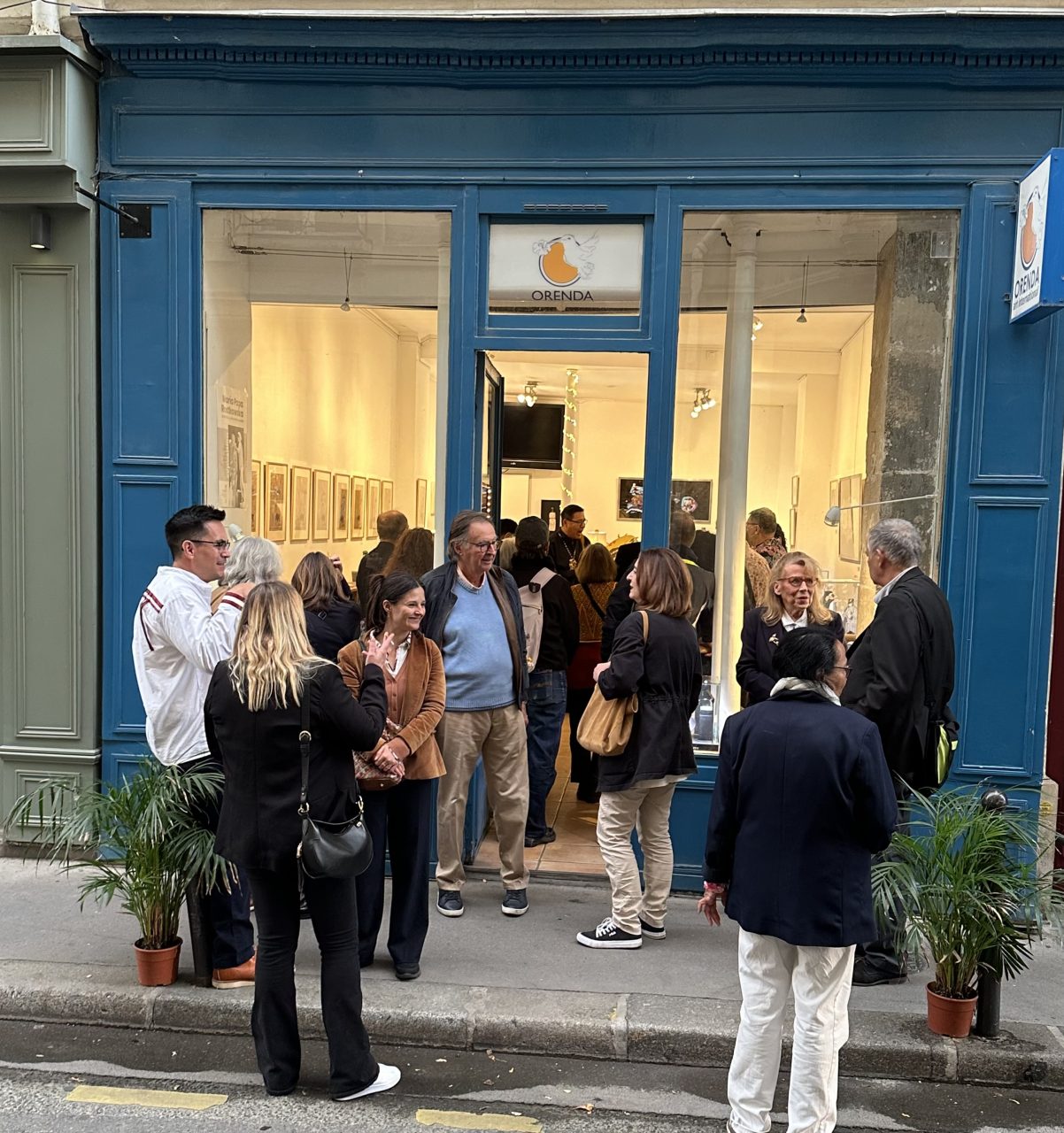 Vernissage - Galerie Orenda (Paris, France).
 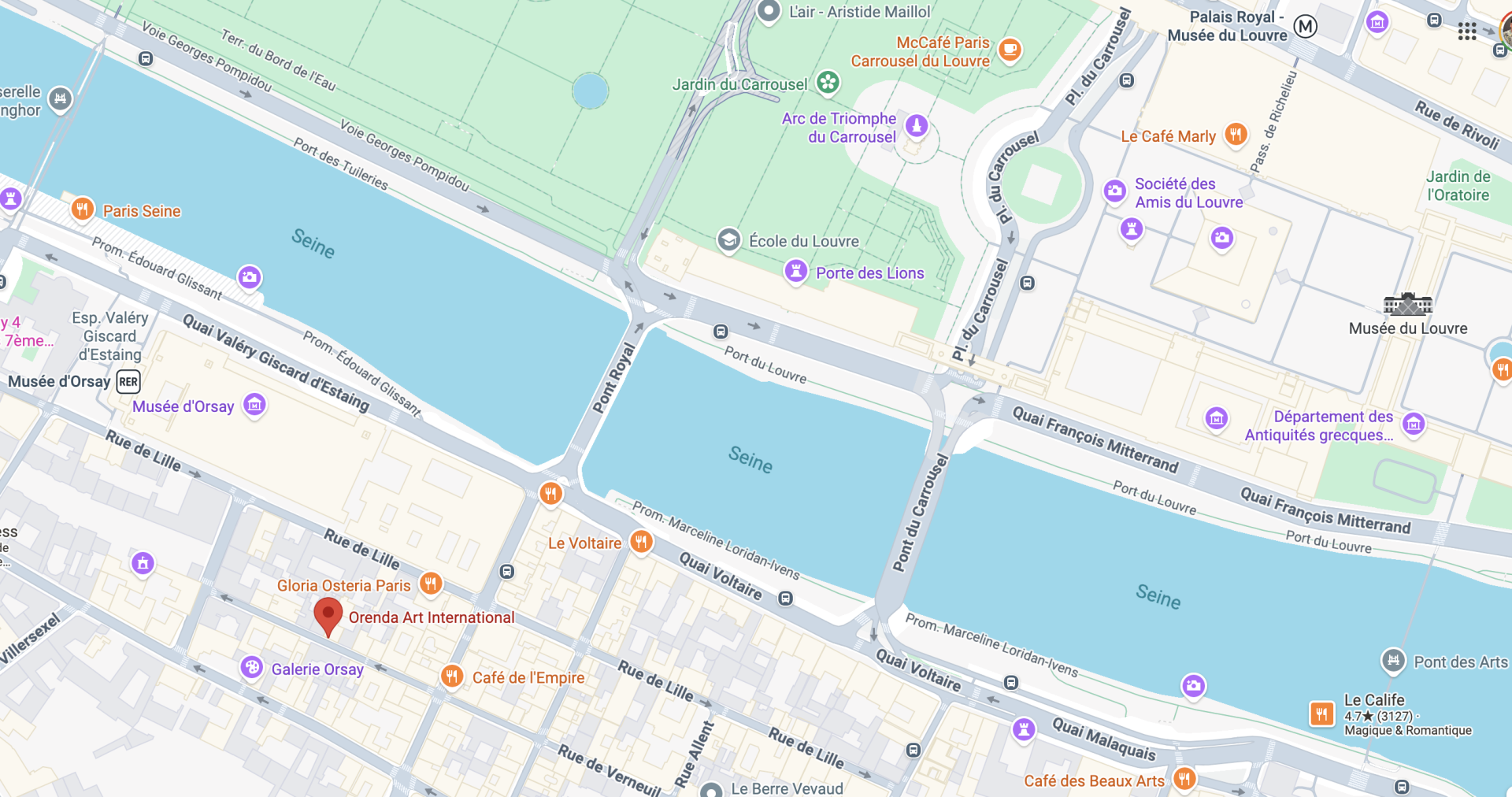 GALERIE ORENDA 54 rue de Verneuil (7e arrondissement) 75007 PARIS.