To view photo images scroll right on laptop or down on Iphone
Ace’s work entitled Erased (2017) has been acquired by Global Affairs Canada, and the proceeds from this sale is generously donated by the artist and Heffel Galleries to Bruce House (Ottawa).
Bruce House “is a non-profit service organization in support of women, men, and children living with HIV who may be dealing with addiction, mental health issues, homelessness and incarceration. They support a diverse population including members of the LGBTQ, ACB (African, Caribbean, and Black), and Indigenous communities as well as newcomers to Canada. Bruce House ensures that their clients have access to equality, housing stability, supported independence, and opportunities for healthy living.” (Source: Bruce House website).
ABOUT THE WORK
In 2017, Ace purchased a pair of pink cowboy boots that he sourced from a Housing Works thrift store in Hell’s Kitchen (NYC), a non-profit organization that provides advocacy, support, and lifesaving services to those impacted by homelessness and HIV/AIDS. Ace was in New York City for the opening of the exhibition Native Fashion Now: North American Indian Style at the National Museum of the American Indian (Smithsonian).
Up-cycling these found cowboy boots, Ace embellished them with his signature electronic component floral work, referencing Anishinaabe Great Lakes style beadwork, replete with communication wire trail duster fringe that erases the wearer’s footprints. For Ace, this work addresses his personal relationship to queer history of his generation in the 1980s and 1990s, and the erasure and negative impact that the pandemic had and continues to have on the queer community. Although HIV/AIDS is a medically manageable disease in First World countries today, it is still a deadly disease for the Third World, and it continues to disproportionally and adversely impact marginalized and racialized communities globally.
The exhibition history of Erased (2017) includes John B. Aird Gallery in Toronto for Queer Landscapes / Queer Intersections in 2017; To Be Continued: Troubling the Queer Archive at Carleton University Art Gallery in Ottawa from 2019 – 2020; and in Governor General laureate Gerald McMaster’s installation of Indigenous footwear for the 2022 Governor General’s Visual and Media Arts Award Exhibition at the National Gallery of Canada from October 13, 2022 to January 29, 2023.
Erased (2017) is now in the permanent collection of Global Affairs Canada and is installed in the new Canadian Trade Office in the fashion capital, Milan, Italy.
Please consider making a charitable donation to Bruce House (here).
The artist would like to thank Heffel Galleries for their generous philanthropic partnership in support of Bruce House.
______________________________________________
RESPONSE to Canadian Taxpayers Federation article: ” ‘Upcycled’ cowboy boots, a mitten on a stick: Global Affairs spends thousands on art for Milan consulate” and National Post article: “Harper axed Canada’s Milan consulate to save money. Now we know Trudeau spent $5.5M to reopen it” (April 23, 2026)
The Global Affairs Canada Art Acquisition Program and Diplomatic Collection constitutes a critical platform for the international circulation of Canadian contemporary art. By situating artworks within embassies, high commissions, and official residences worldwide, the program significantly amplifies the global visibility of Canadian artists. This form of cultural diplomacy not only fosters cross-cultural dialogue but frequently catalyzes acquisition opportunities, leading to placements in private international collections as well as major museum and gallery holdings.
The exposure facilitated through Global Affairs Canada is uniquely consequential. It creates vital points of access for international curators, collectors, and cultural institutions to encounter Canadian artistic practices that might otherwise remain outside their purview. In this regard, the program operates as a strategic conduit for global engagement—one that extends beyond the primarily domestic mandate of the Canada Council Art Bank.
The breadth of artistic production represented—spanning diverse media, methodologies, and cultural perspectives—reflects the complexity and plurality of Canadian identity on the world stage. As such, the visual arts sector is not only culturally indispensable but also economically significant, contributing over $4 billion annually to Canada’s GDP.
Moreover, the Global Affairs Canada Fine Art Collection stands as a national cultural treasure of exceptional importance. Encompassing works from historical to contemporary periods, it includes seminal pieces that collectively map the evolution of artistic production in Canada. Distinguished by its commitment to excellence and its reflection of the country’s multicultural fabric, the collection constitutes a world-class repository of Canadian art—one that is both representative and aspirational in its scope.
As an artist whose work is represented in the Global Affairs Canada Art Acquisition Program and Diplomatic Collection, I have directly experienced the program’s capacity to generate meaningful international exposure. My inclusion has facilitated opportunities for my work to be presented in contexts in the United Kingdom and Italy, extending its reach to diverse audiences and institutional networks.
In the case of my work Erased, which engages the enduring impact of the 1980s AIDS crisis, this international visibility translated into a tangible social outcome. The acquisition of the work enabled a philanthropic gesture, whereby the full proceeds from my sale were donated to Bruce House, a non-profit organization dedicated to supporting individuals living with HIV.
Bruce House provides critical services to women, men, and children navigating complex and intersecting challenges, including addiction, mental health, homelessness, and experiences of incarceration. Their work is grounded in a commitment to equity and care, serving diverse communities including LGBTQ+, African, Caribbean, and Black (ACB), Indigenous populations, and newcomers to Canada. Through housing support, health-focused programming, and pathways to support independence, Bruce House fosters stability, dignity, and opportunities for sustained well-being.
This experience underscores how the Global Affairs Canada collection not only advances the international profile of Canadian artists, but also enables broader social and cultural impact—demonstrating the potential for artistic production to intersect meaningfully with advocacy, community support, and public good.
Barry Ace
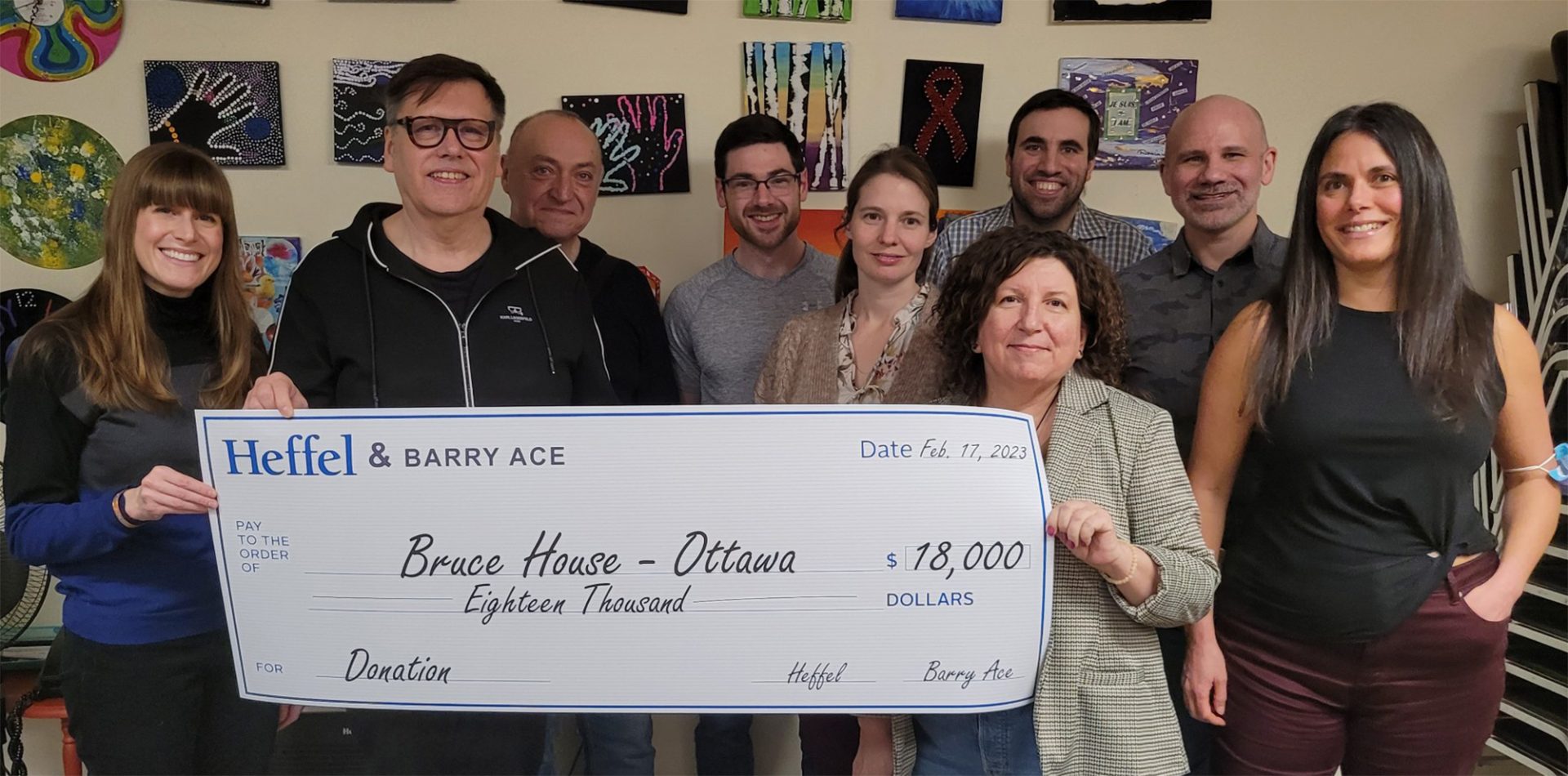 Tania Poggione (Heffel, Montreal), Barry Ace (Artist), Bill Staubi, David Dunnigan, Sam Taylor, Lorraine Kelly, JP Bergeron, Patrick James Morley, Linda Truglia. Photo: Alexandre Caron
 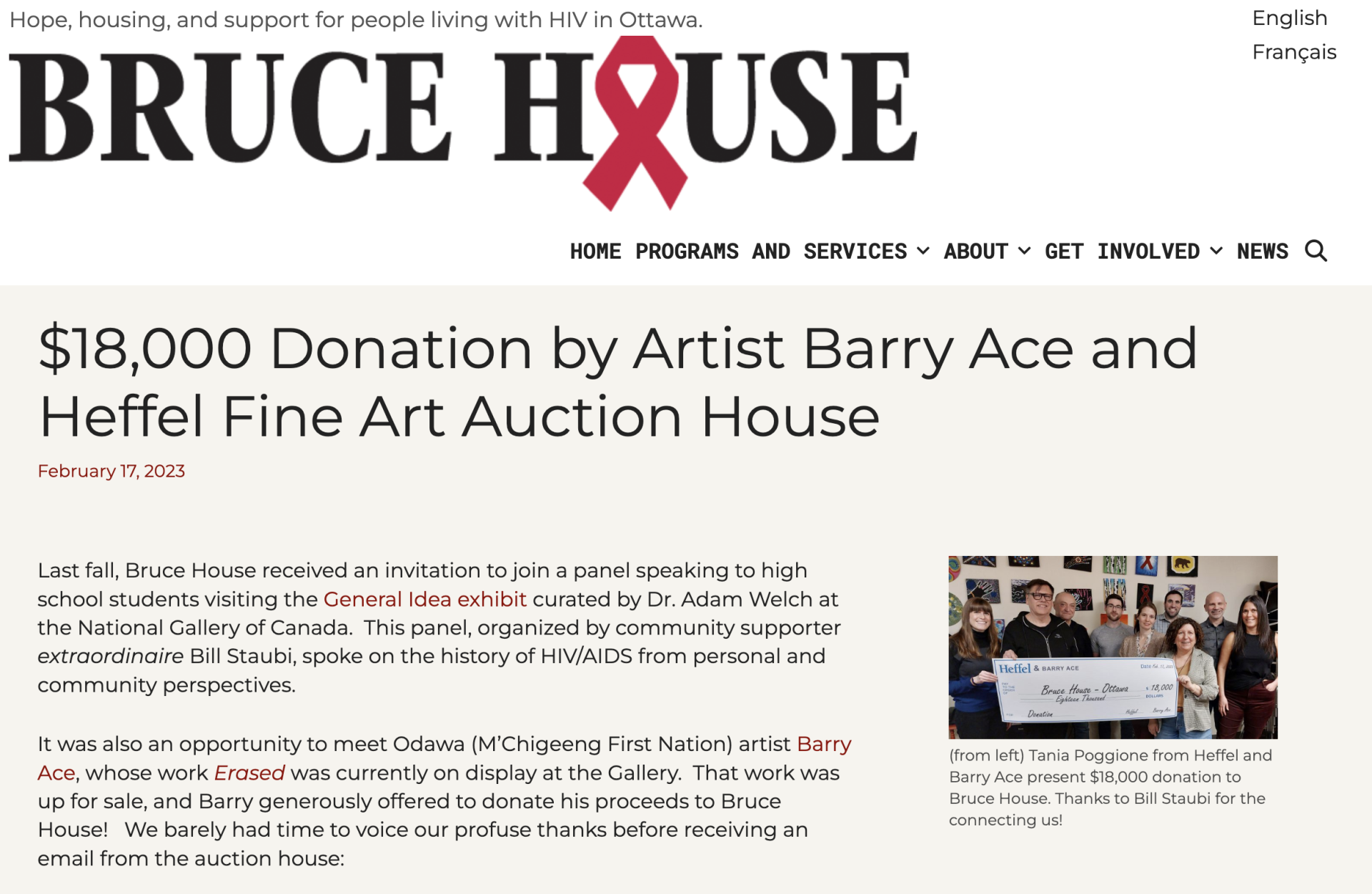 Bruce House Donation by Barry Ace and Heffel
 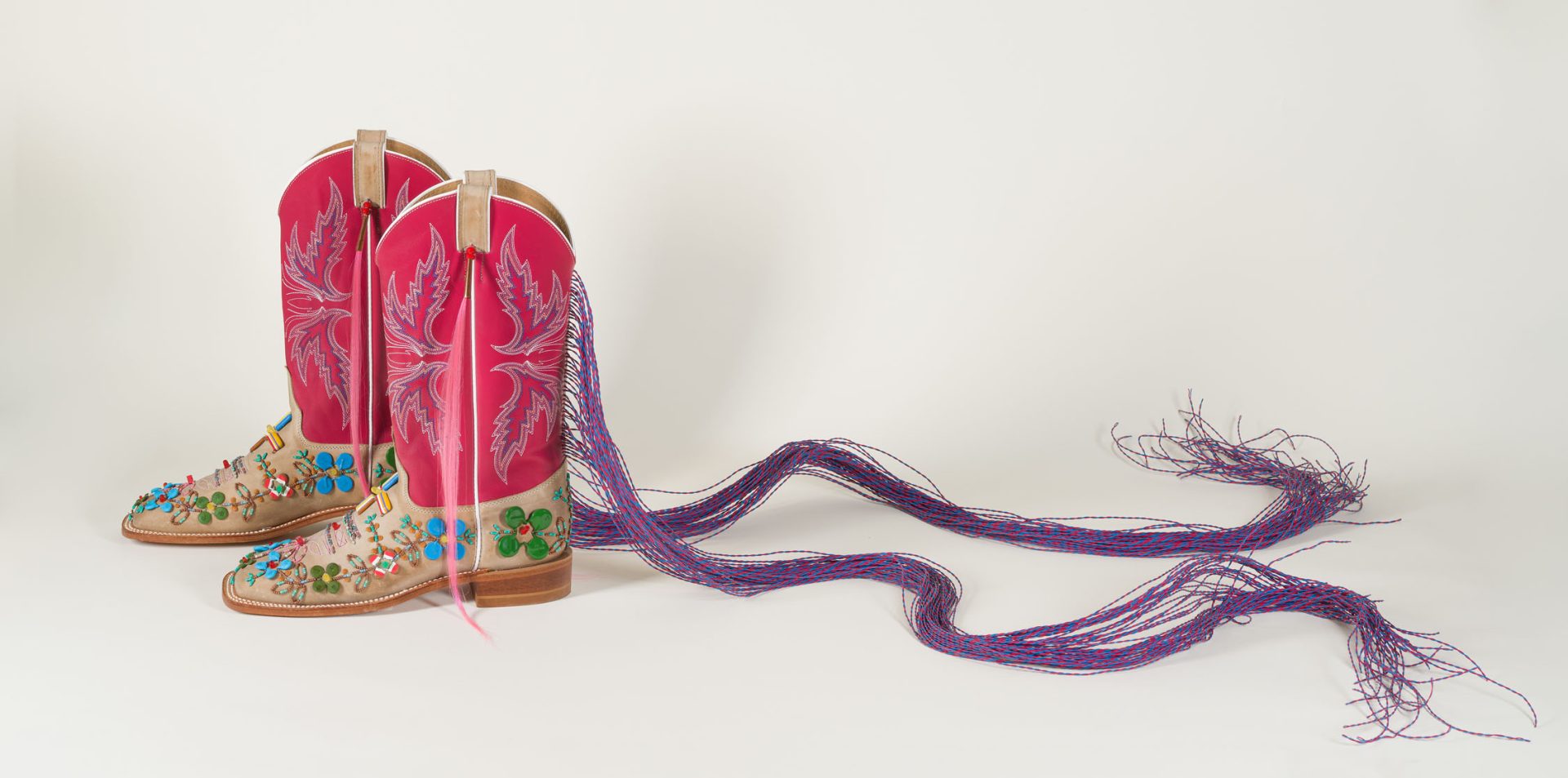 Erased (2017) 36.8 x 14 x 132.1 cm, mixed media. Collection of Global Affairs Canada.
 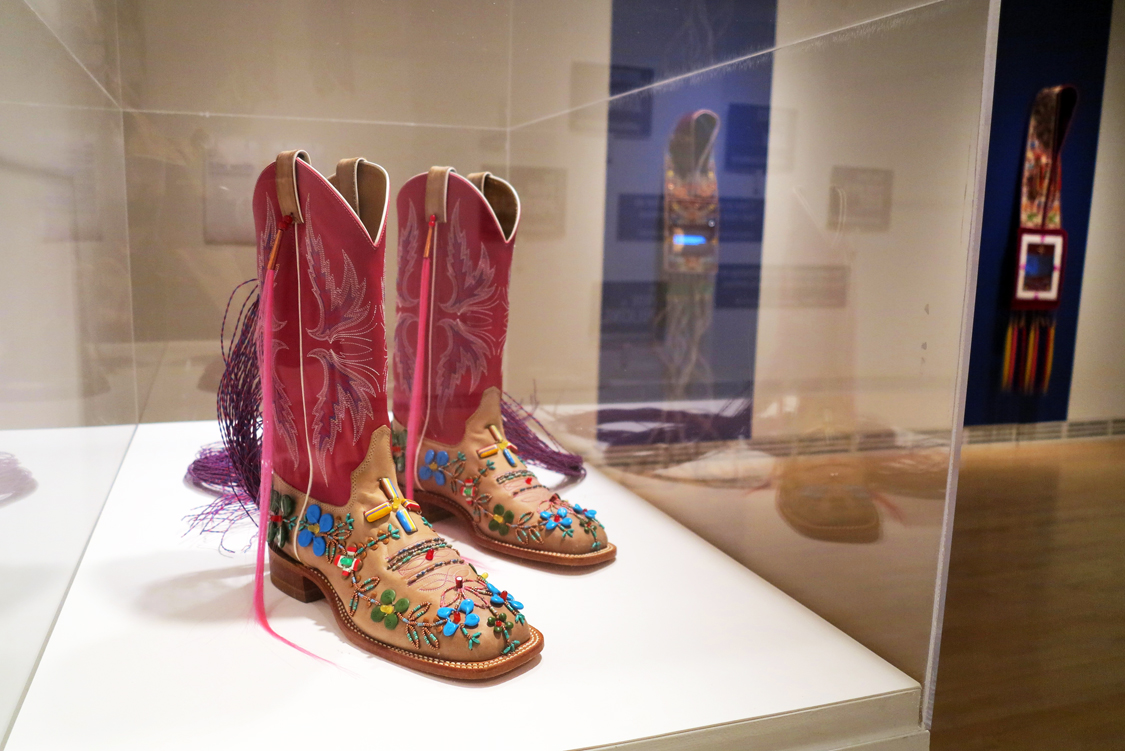 Installation view of Erased. CUAG. Photo: Leah Snyder
 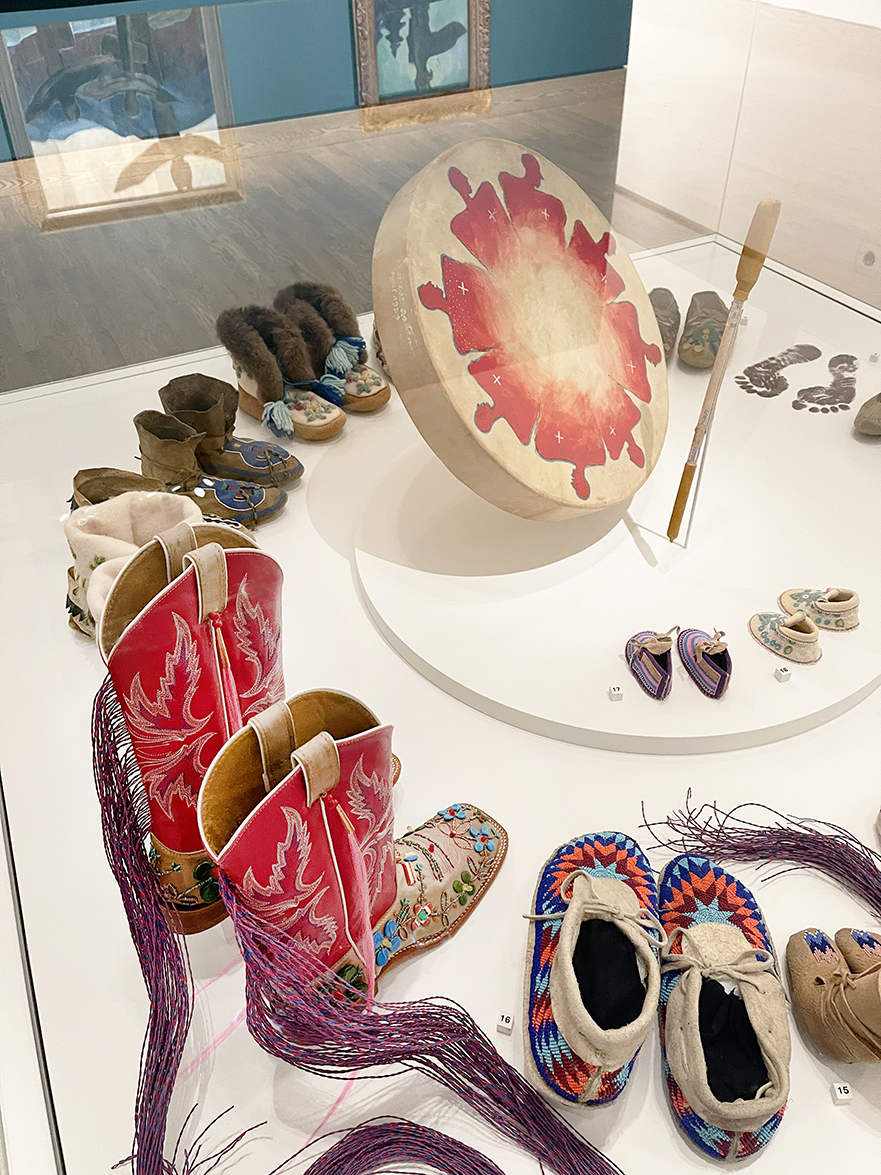 Erased (2017) installed at the NGC. Photo: Courtesy of Leah Snyder.
 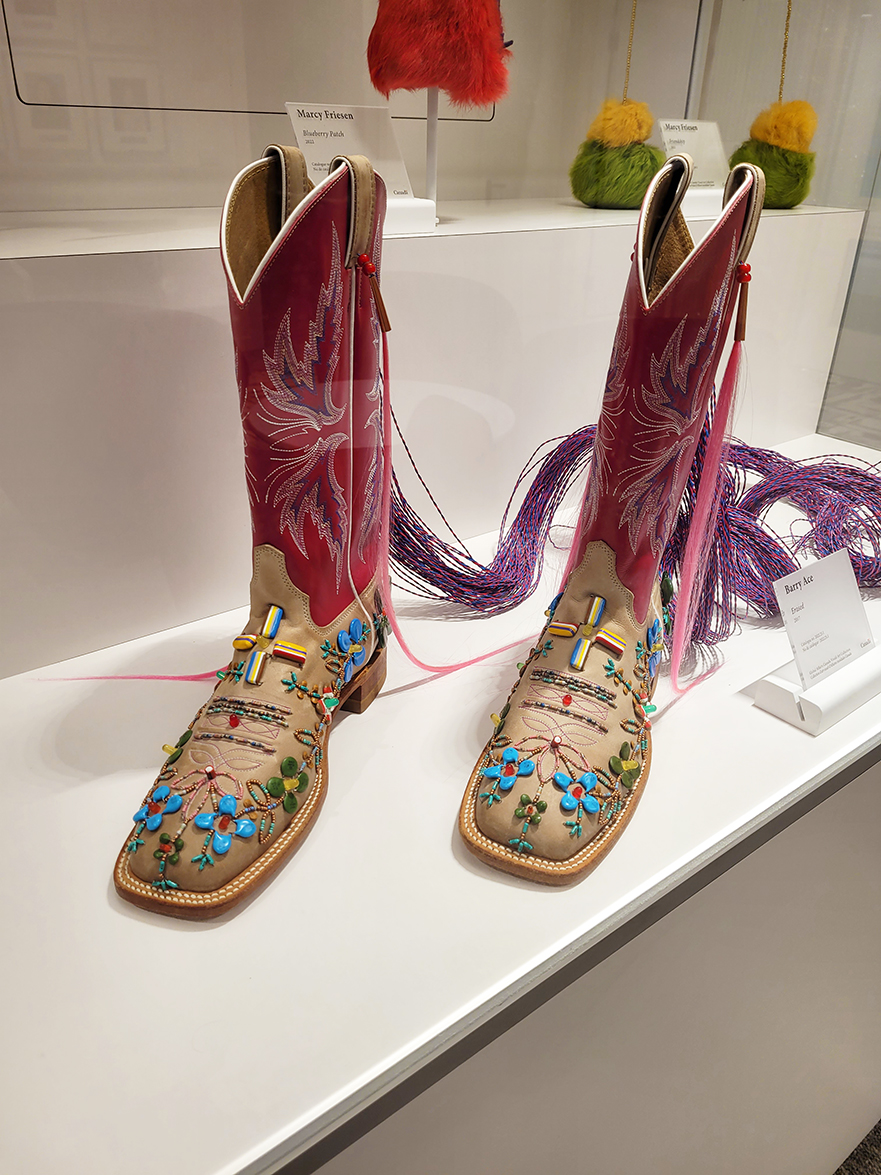 Erased (2017) Canadian Trade Office, Milan, Italy. Photo: Kevin Saulis.
 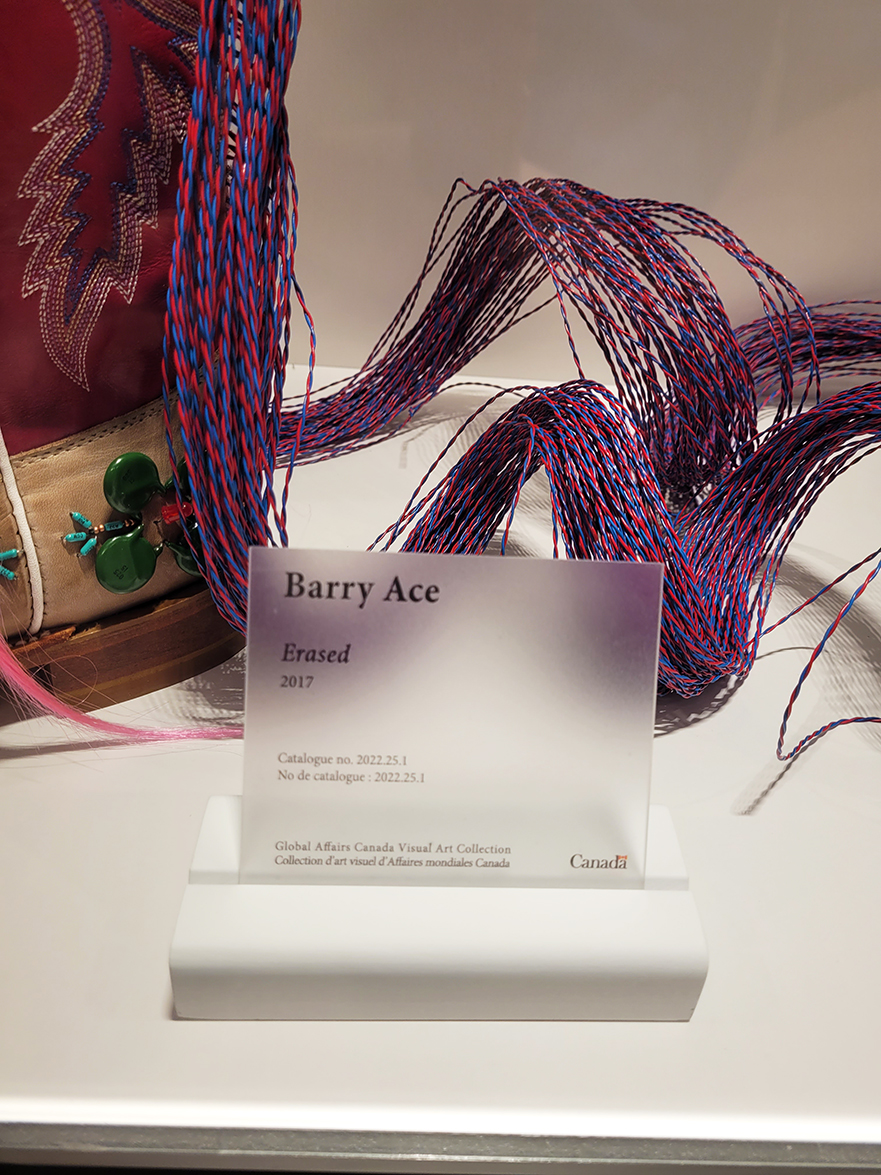 Erased (2017) Canadian Trade Office, Milan, Italy. Photo: Kevin Saulis.
 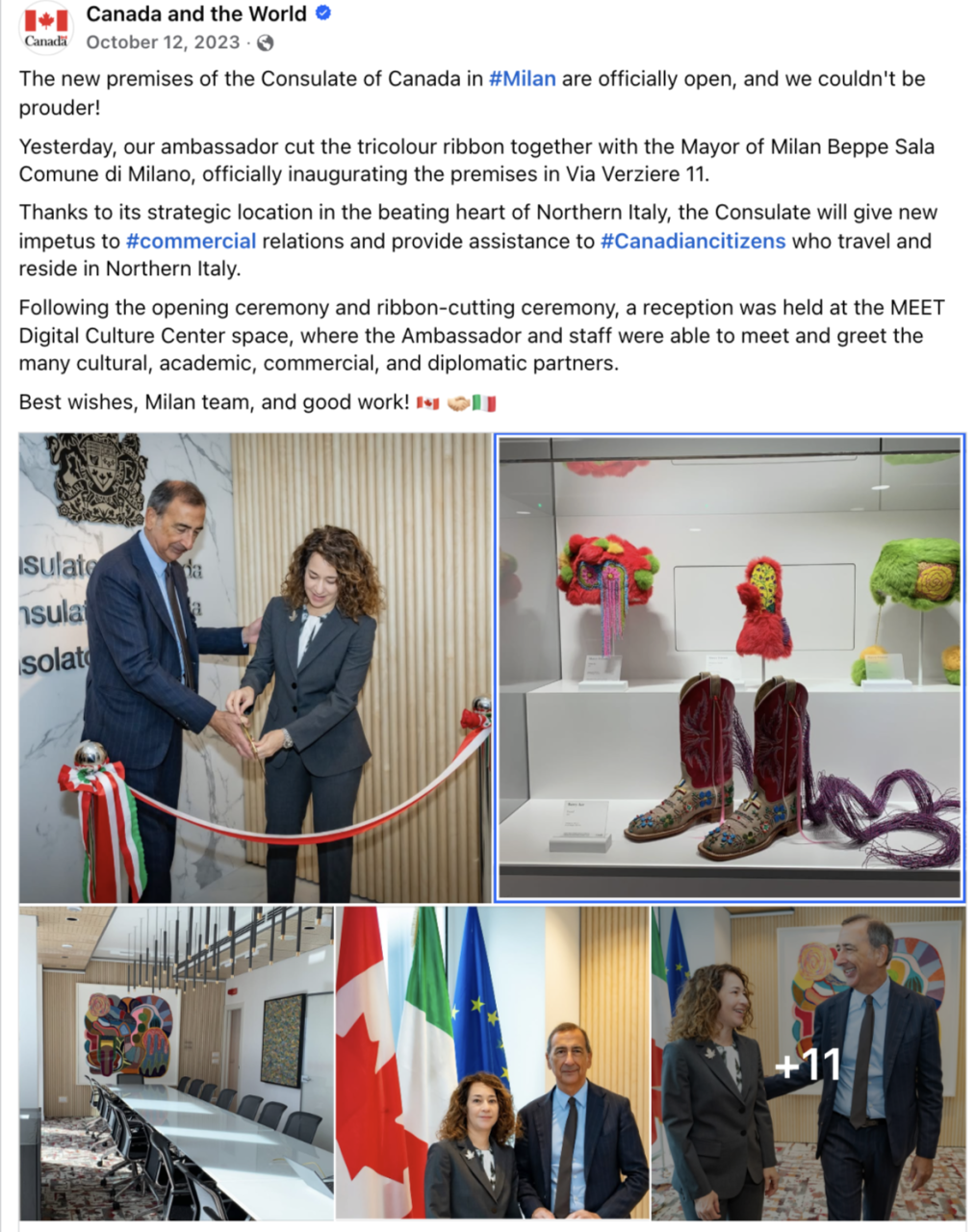 Erased (2017) Canadian Trade Office, Milan, Italy.
 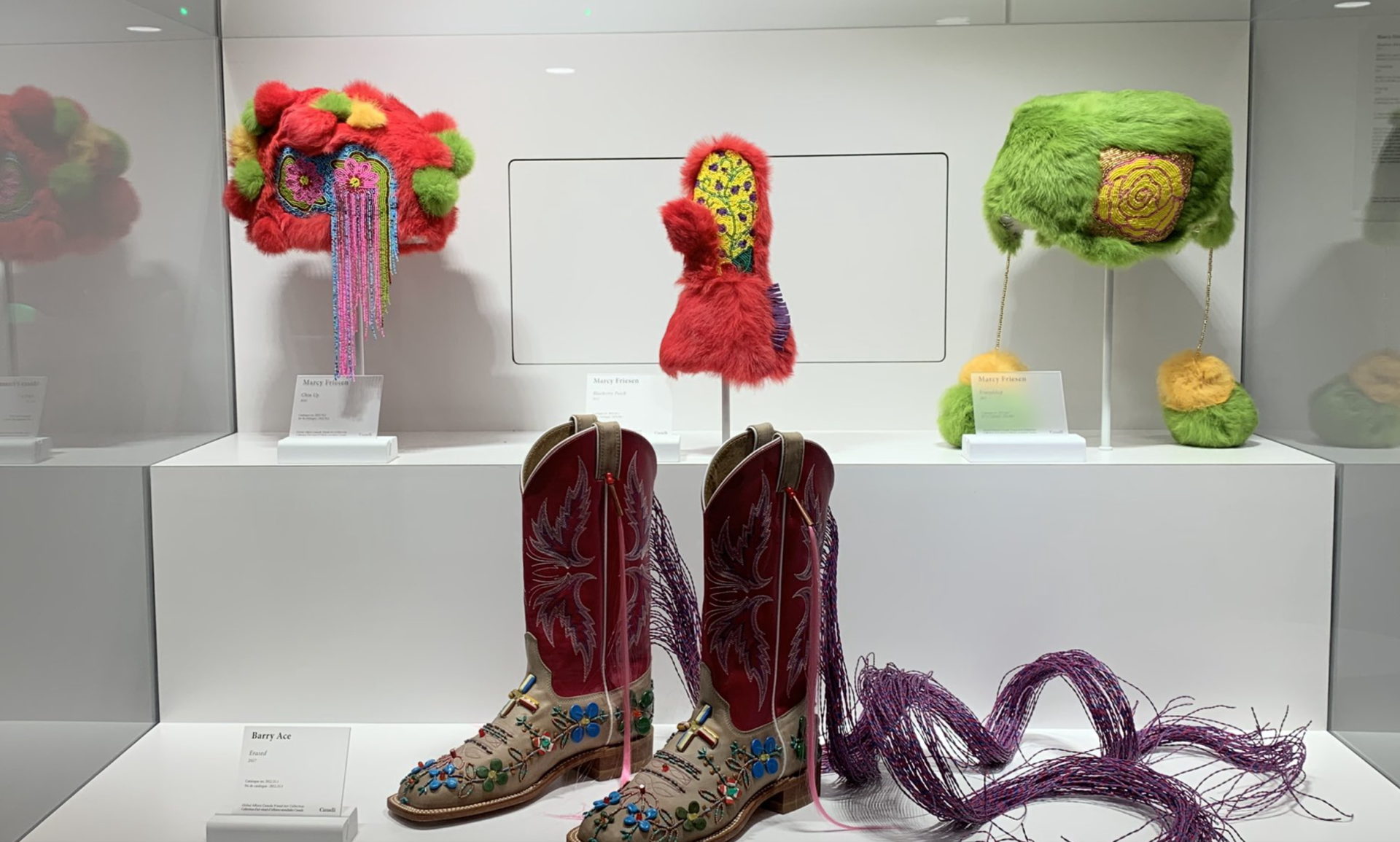 Erased (2017) Canadian Trade Office, Milan, Italy.